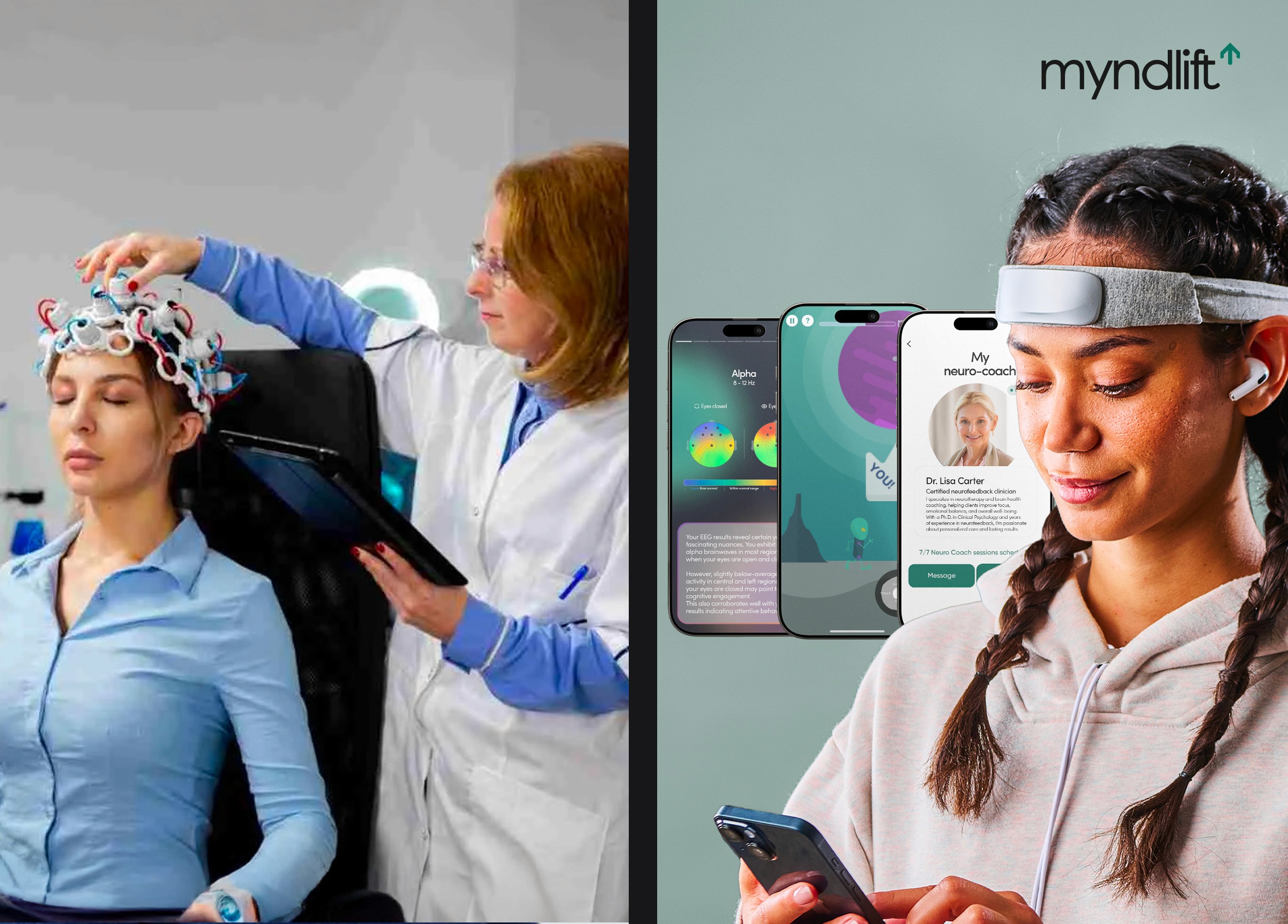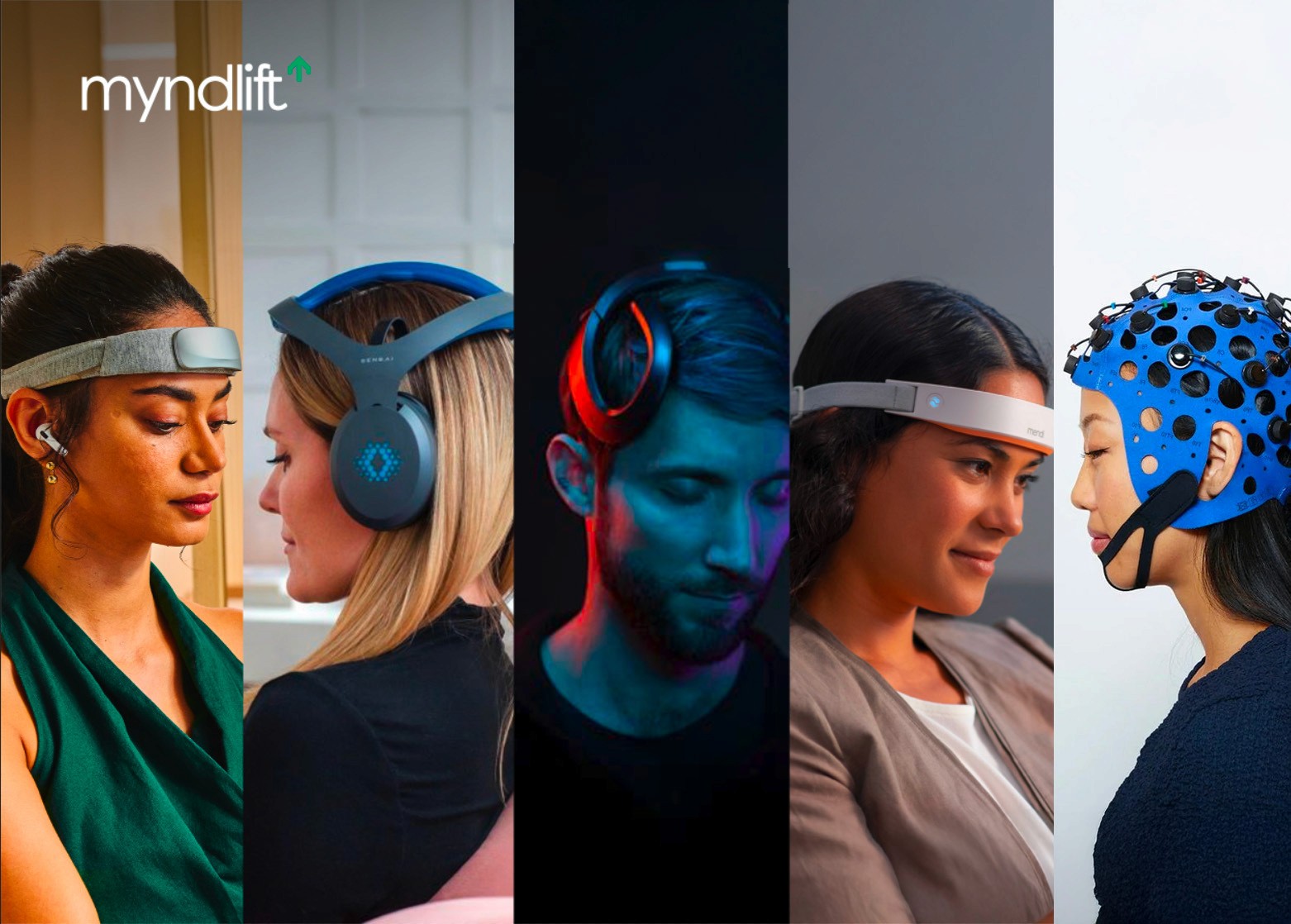
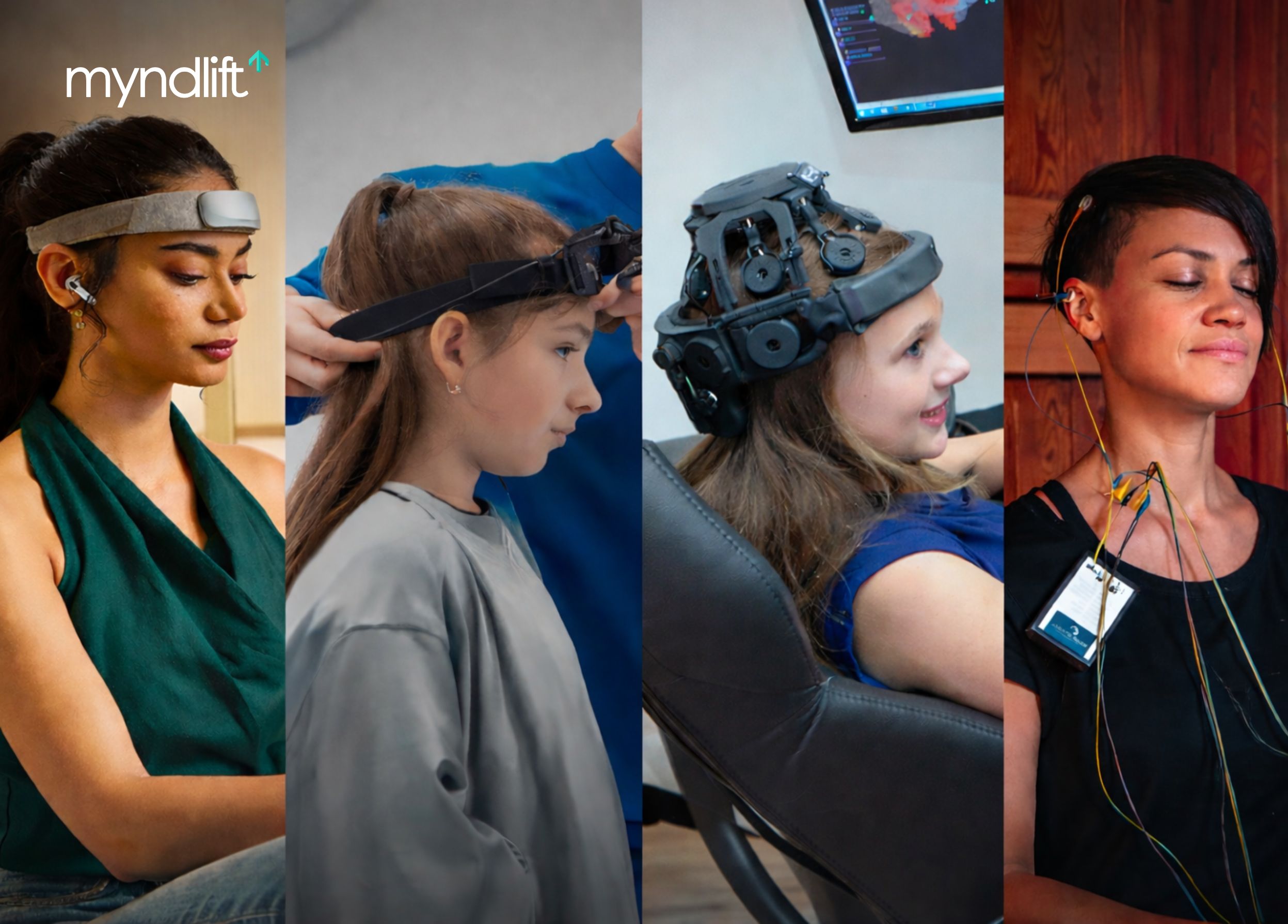
This article compares the main neurofeedback methods, including how they work, where they’re used, typical price ranges, and practical limitations
Linear/standard neurofeedback is highly targeted and regulates specific brainwaves (Myndlift).
LORETA neurofeedback is similar to linear, but targets deeper brain networks (BrainMaster).
Infra-low frequency (ILF) neurofeedback focuses on extremely slow regulatory brain activity and is sensitive to small parameter changes.
Dynamic neurofeedback works on generic brain activity with no target frequencies or sites (Neuroptimal).
Two people can both say they’re “doing neurofeedback” and be having very different experiences.
One might be working with a clinician and following a structured training plan. Another might be wearing EEG headphones at work while a system tracks brain activity and adjusts feedback in real time. Both fall under the same umbrella, but the methods behind them are not the same.
Understanding these differences helps explain why neurofeedback can vary so widely in setup, supervision, and everyday use.
This article provides a practical overview of the main neurofeedback methods in use today and compares how they work side by side.
Linear/standard (frequency-based) neurofeedback
Linear neurofeedback training usually starts with an assessment, such as a brain map (qEEG), and symptom questionnaires. This information is used to decide which brainwave patterns should be trained. Think of it like a physiotherapy exam to determine what to target, and the training is then designed to guide the brain toward healthier, more efficient patterns.
During sessions, feedback changes in real time based on how the targeted brainwave oscillates.
When the targeted brainwaves hit a desired state (elevation or decrease), the feedback responds in a rewarding way (for example, a game character moves faster). When it moves away, the feedback responds differently (for example, the character slows down). This is classic conditioning.
Given the flexibility in deciding which brainwaves to target, linear neurofeedback is considered the gold standard and is the most studied method.
The easy setup allows it to be done from both the clinic and home, and is relevant for multiple conditions, including ADHD, anxiety, PTSD, and even performance enhancement.
In short:
Highly personalized and defined: Training is based on predefined brainwave targets selected before sessions begin.
Gold standard in the industry: used by most neurofeedback clinicians and practices due to high personalization, scientific support, and simplicity.
Common systems: Myndlift, BrainMaster, Thought Technology, BrainCore.
Best for: Clear, specific training goals (focus, stress, performance)
LORETA neurofeedback
LORETA neurofeedback uses mathematical models to estimate where brain activity is likely originating within the cortex (the outer layer of the brain involved in things like attention, emotion, and planning), based on EEG signals recorded at the scalp.
This allows training to focus on broader brain areas rather than a single sensor location, which can be useful when clinicians want to work with distributed functions such emotional regulation that is not easily linked to one surface site.
At the same time, it adds setup and interpretation complexity, so it is mainly used in specialized clinical or research settings and cannot be done from home.
In short:
Deeper, cortical feedback
Higher setup and interpretation complexity
Common systems: BrainMaster
Best for: More complex clinical cases
Infra-Low Frequency (ILF) neurofeedback
Infra-Low Frequency neurofeedback focuses on extremely slow brain oscillations, meaning shifts in brain activity that unfold over many seconds rather than fractions of a second.
These slow patterns are associated with basic nervous system regulation, such as overall arousal level, stress reactivity, and emotional stability.
Training at this level is subtle because changes are gradual, and sensitive because small adjustments to training settings can noticeably affect how a person feels. For example, a slight change in training frequency may shift someone from feeling calmer to feeling overstimulated.
For this reason, clinicians adjust parameters carefully over time based on observed responses rather than fixed brain maps. Because ILF relies on close observation and fine-tuning, it is almost always delivered in a clinical setting.
In short:
Feedback is linked to extremely slow regulatory brain activity
Training is sensitive to small parameter changes
Common systems: Thought Technology, BrainMaster
Best for: General wellbeing, non-directive training
Dynamic (non-linear) neurofeedback
Dynamic neurofeedback uses real-time brain activity to generate feedback without selecting targets in advance.
Instead of responding to a specific brainwave pattern or location, the feedback is based on real-time shifts in the raw brain signal.
There’s no assessment, no personalized protocols - the system simply reflects moments of change back to the brain, letting it notice itself and adjust however it wants.
Despite the simplicity, the lack of clear targets makes it ambiguous who this could be beneficial for. Moreover, given its proprietary nature, it’s the least studied or used among the methods mentioned here.
In short:
Feedback follows changes in brain activity
No predefined targets or protocols
Common systems: NeurOptimal
Best for: Emotional regulation
How neurofeedback methods compare
Here’s where the differences become easier to grasp.
Method | Feedback logic | Highlighted system | Easy setup | Price range | At-home use | Best for |
|---|---|---|---|---|---|---|
Linear | Targets specific brainwaves at the cortical level | Myndlift | ✅ | $100–$200/session (in clinic) $150–$300/month (at home | ✅ | Clear, specific training goals (focus, stress, performance) |
LORETA | Targets specific brainwaves at estimated “deeper” brain regions | BrainMaster | ❌ | $175–$300/session | ❌ | More complex clinical cases |
Dynamic | General brain signal feedback with no pre-defined targets. | NeurOptimal | ✅ | +$650/mo | ✅ | Emotional regulation |
Infra-low | Targets ultra-slow frequencies | Thought Technology | ❌ | $150–$250/session | ❌ | General wellbeing, non-directive training |
Prices vary by provider, region, and level of clinical involvement.
Clinic-based vs at-home neurofeedback
Historically, neurofeedback has been clinic-based. Systems were complex, and adjustments were made in person.
Remote neurofeedback introduces a different challenge: maintaining clinical rigor while making the experience usable outside a clinic.
Not all methods translate well to this setting. Some rely too heavily on in-person observation or highly sensitive adjustments.
This is where platform design matters as much as the modality itself.
Where Myndlift fits in the landscape
Myndlift uses the same linear, frequency-based methods long used in clinical systems like BrainMaster and Thought Technology.
However, it was built specifically to support remote training while keeping clinicians in the loop. Protocols are still designed and reviewed by professionals, but sessions can happen at home through a structured, monitored platform.
In other words, it applies established clinical methods in a format designed for modern use.
Choosing the right approach
Different neurofeedback methods exist because people have different needs.
Some benefit from precise, targeted training. Others prefer simplicity. Some require close clinical supervision. Others want flexibility. Understanding the method behind the system helps set expectations and makes it easier to choose a path that actually fits.
FAQs
Is neurofeedback one technique or several different methods?
Neurofeedback is an umbrella term that includes several distinct methods, such as linear (frequency-based), LORETA, dynamic (non-linear), and infra-low frequency (ILF) approaches. These methods differ in how feedback is generated and applied.
What is the main difference between linear and dynamic neurofeedback?
Linear neurofeedback links feedback to predefined training targets, while dynamic neurofeedback generates feedback without fixed targets and responds to ongoing changes in brain activity.
Do all neurofeedback methods require a brain map (qEEG)?
No. Linear and LORETA neurofeedback often use assessments such as qEEG, questionnaires, or cognitive tests to guide training. Dynamic neurofeedback does not rely on brain maps or predefined targets.
What does “region-based” training mean in LORETA neurofeedback?
Region-based training refers to using mathematical models to estimate activity across broader brain areas rather than focusing on individual sensor locations on the scalp.
Why is infra-low frequency neurofeedback usually delivered in clinics?
Infra-low frequency training is sensitive to small parameter changes and relies on close observation and gradual adjustment, which makes it better suited to supervised clinical settings.
Can neurofeedback be done at home?
Some neurofeedback methods, particularly linear and dynamic approaches, can be used at home when supported by appropriate platforms and supervision. Other methods are typically clinic-based.
Is one neurofeedback method better than the others?
No single method is universally better. Different neurofeedback approaches are suited to different goals, levels of supervision, and training environments. Some methods are more extensively studied and more widely used than others, but effectiveness still depends on how and for whom they’re applied.

Related posts