
Last updated: August 28, 2026
This article covers what theta waves are, when they appear, and explains their link to sleep, cognition, and emotional balance.
Theta waves show up during light sleep, the transition into sleep, and early waking.
Theta activity is linked to memory formation, creative insight, emotional processing, and relaxation.
Unbalanced theta levels may relate to difficulty focusing, disrupted sleep, or trouble recalling information.
Practices like meditation, slow breathing, good sleep habits, and neurofeedback may help support healthier theta patterns.
Have you ever noticed how your mind drifts just before sleep? That relaxed, almost dreamlike state is accompanied by an increase in theta brain waves. But their relation to your physical and mental health goes far beyond rest.
Your brain activity is defined by five types of waves, known as delta, theta, alpha, beta, and gamma. Each state is linked to your mental state in different ways, and can impact how you perform day-to-day tasks. Gamma, for instance, supports lightning-fast learning, while alpha is linked to calm focus for zen-like moments.
Then there are theta waves. As the second-lowest frequency of brain activity, they’re definitely on the slower side, but what they lack in speed, they make up for in their impact. In fact, these waves are linked to sleep, memory, and learning - and that’s just getting started.
In this guide, we’ll answer:
What are theta waves?
What are theta waves linked to?
What happens when your theta waves are unregulated?
How can you encourage the theta brain state?
What are theta waves?
Theta waves are amplified in the first few minutes of sleeping, as you enter a period known as the hypnagogic state. They’re much less prominent in deep (slow-wave) sleep, which is dominated by delta, but usually occur:
Just before you drift off, as the brain transitions from alpha to theta.
During very light sleep (known as stage 1 of the sleep cycle)
As you’re waking up.
Theta waves can also appear while you’re awake, especially during meditation, deep relaxation, creative thinking, or moments of internal focus.
They are measured using an electroencephalogram (EEG), which monitors and records brain activity, displaying it as waves so that we can understand more about the different frequencies experienced during different cognitive states.
How do I know if I’m in a theta state?
You won’t be able to sense theta waves themselves; brainwaves aren’t something we consciously feel.
What you can notice is the state that usually comes with increased theta activity: that drifting, in-between moment when wakefulness starts dissolving into sleep.
A classic way to catch this transition comes from artists like Dali and Edison:
Get into a comfortable position, holding an object in one hand.
Let yourself fall asleep.
When you’re asleep, your muscles will relax, and you’ll drop the object.
The noise of the object falling will wake you up.
Unlike a normal theta state, this cuts your rest short, helping you become more aware of the transition into theta and how it differs from other states.
What this trick does isn’t detect theta; it simply helps you become more aware of the hypnagogic state where theta activity tends to rise. It’s a playful way to notice a mental transition that normally passes unnoticed.
Theta waves frequency
When looking at the brain frequency of different states, theta waves sit between alpha and delta waves. Alpha waves are slightly faster at between 8-13 hertz (Hz), while delta waves are slower, reaching around 0.5-4 Hz.
Theta waves have a frequency of 4-8 Hz, filling the gap between the two. On an EEG screen, you’d see that the peaks and troughs of the waves are pretty relaxed, reflecting the state of mind these waves are responsible for.
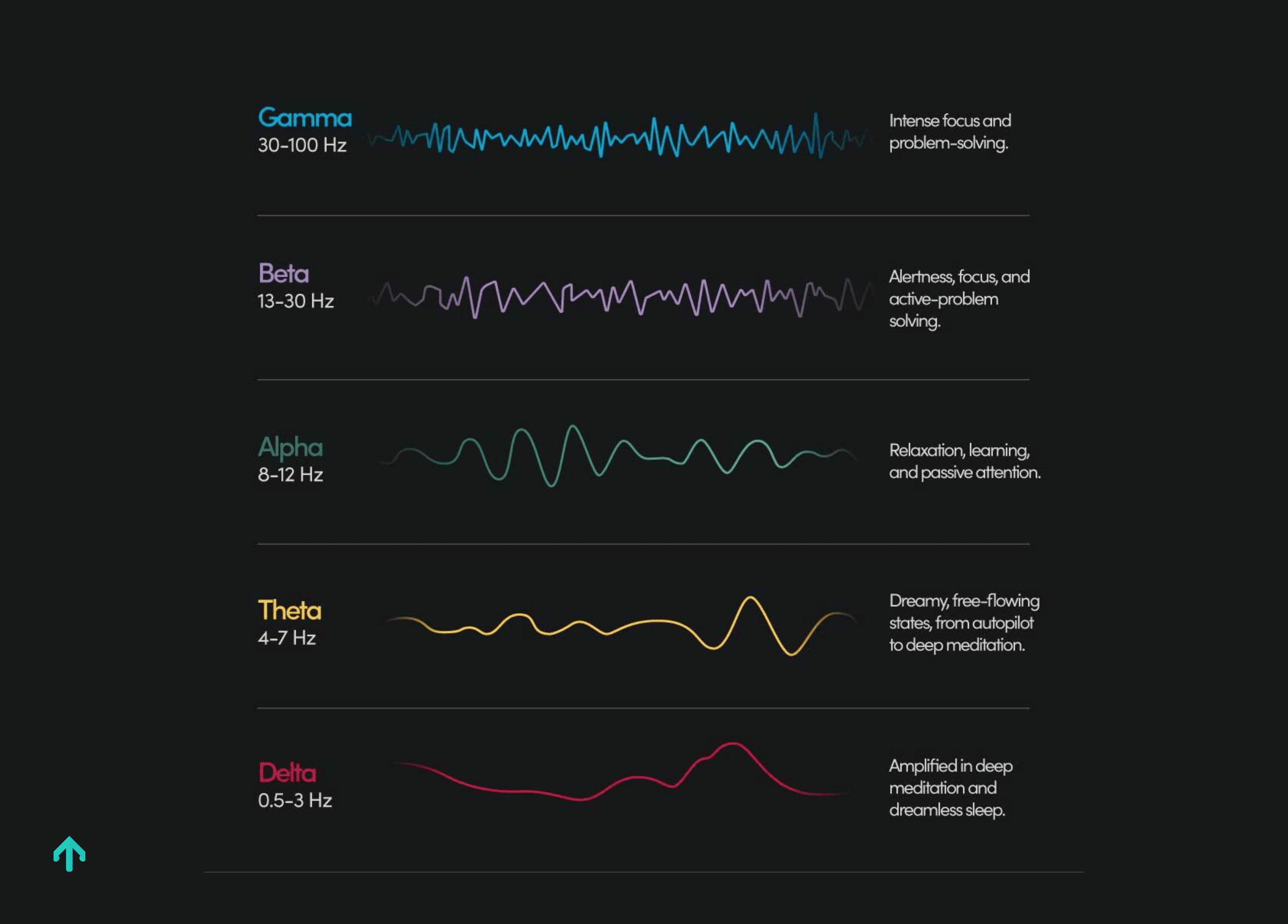
Visual Guide to Brainwaves: What we've learned about the brain from 1M neurotherapy sessions →
Researchers sometimes distinguish between lower and higher theta frequencies because different sub-bands may support different cognitive functions. But in humans, especially with scalp EEG, this isn’t a strict divide; it’s more a pattern that appears in certain studies rather than a rule.
Lower theta (around 4 Hz) is often associated with REM sleep, while higher theta (closer to 8 Hz) tends to relate more to calm, meditative states, similar to the alpha, but with less awareness of your surroundings.
Brainwave | Frequency | Common State | Often Associated With |
Gamma | 30–100 Hz | Intense focus | Information processing, learning, complex thinking |
Beta | 13–30 Hz | Active thinking | Attention, problem-solving, alertness |
Alpha | 8–12 Hz | Relaxed wakefulness | Calm focus, learning, mental coordination |
Theta | 4–7 Hz | Deep relaxation, light sleep | Creativity, memory, meditation, internal focus |
Delta | 0.5–3 Hz | Deep sleep | Physical restoration, recovery, deep rest |
Your brain naturally shifts between different brainwave states throughout the day depending on what you’re doing, feeling, and experiencing. No brainwave is inherently “good” or “bad.” Healthy brain function depends on the right patterns appearing at the right times.
What are theta waves linked to?
Theta waves act as a bridge between the relaxed alpha state and the deep rest of delta. They’re the gentle transition that guides your brain toward sleep and restoration.
Moving beyond this, though, optimal theta wave activity has been linked to a whole host of benefits for your body and mind, including boosting memory and reducing stress.
1. Reduce Stress and Anxiety
Theta activity has been linked to changes in stress physiology in some studies, including cortisol patterns, but the relationship isn’t straightforward. Still, theta-rich states are often associated with a more relaxed, downshifted mode of functioning.
For anyone who struggles with chronic stress or anxious thoughts, learning how to nurture this brainwave state could be a powerful tool for improving mental health.
2. Encourage Your Creativity
Theta activity has long been linked to creative thinking, especially during those drifting, half-asleep moments when the mind starts making unusual connections.
Studies show that the light, dreamlike state at sleep onset, where theta tends to increase, can support insight and problem-solving. It’s one reason many people wake from naps with fresh ideas. Some of history’s most inventive minds took this seriously. Dali, Edison, and others used the hypnagogic state on purpose, letting themselves nod off just enough to tap into that loosened, associative mode of thinking.
3. Form Memories
Theta waves are present in brain activity when you’re recalling an event, tying them closely to memory. Scientists view theta activity as a sort of “glue” that brings memories together, ensuring moments that are processed in different areas of the brain are combined into a singular event.
In fact, some studies show that practices which increase theta activity can enhance certain types of memory performance.
4. Improve Your Emotional Regulation
If you struggle to cool your anger or react calmly in moments of stress, it could all be down to your brain activity.
Theta and delta activity, especially during sleep, are involved in how we process and regulate emotions. Supporting healthy sleep and balanced brain states may help you respond more steadily to stress.
What if your theta waves are unbalanced?
We’ve explored what you can expect from theta wave benefits, but what about the downsides to unbalanced theta activity? Let’s take a look.
Your Memory
Because theta waves are closely linked to learning and memory formation, an imbalance can make it harder to recall information. Abnormal theta activity, for example, may contribute to memory deficits in adults with major depressive disorder (MDD). You might also feel mentally foggy or forgetful if your theta waves are unbalanced.
Not Enough Sleep
Theta activity naturally increases during the early stages of sleep. If these patterns are disrupted, drifting off or staying asleep can become more difficult. Unfortunately, sleep deprivation comes with its own plethora of negative side effects, from heightened anxiety to increased blood pressure, making it important that you identify the root cause.
Poor Focus
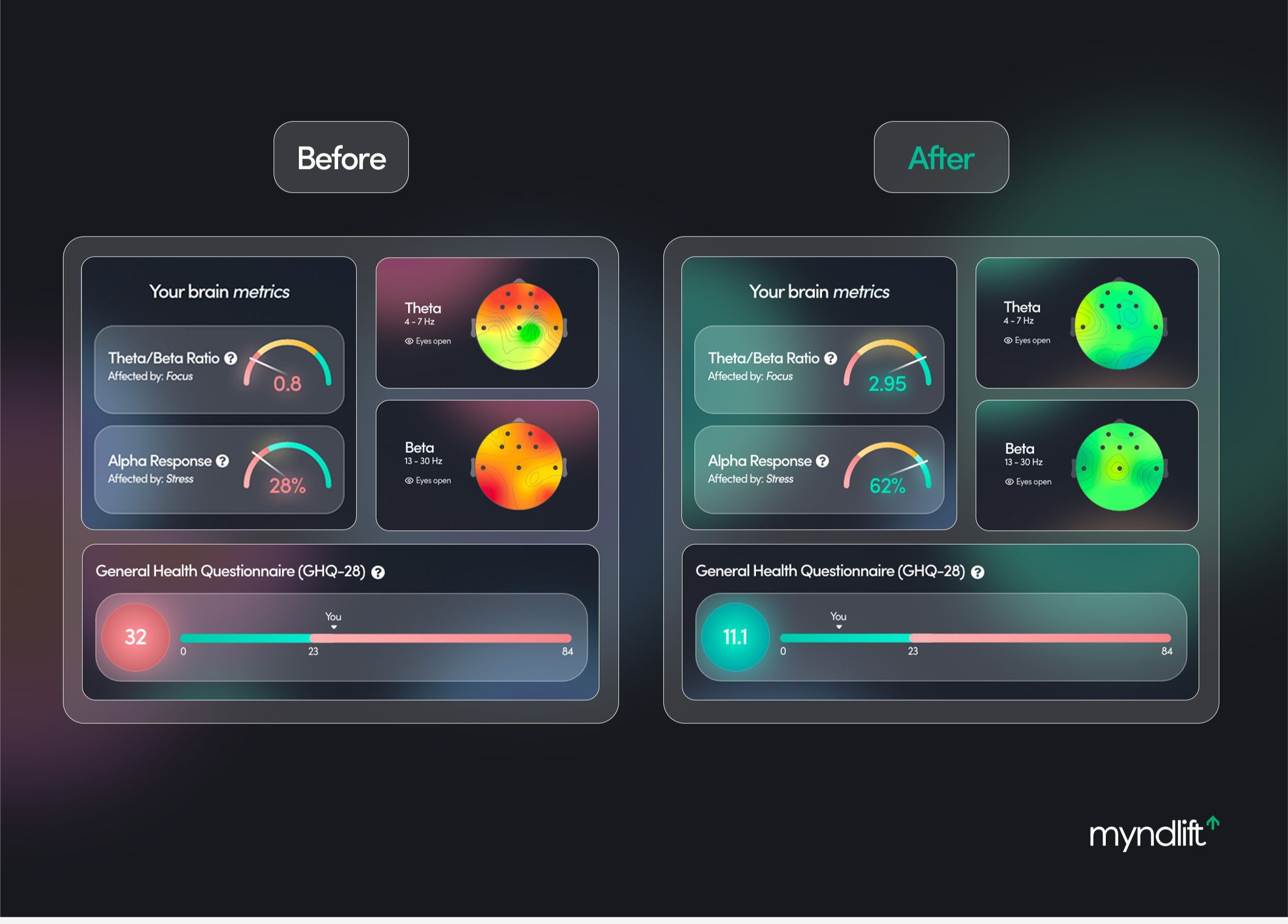
While theta waves support imagination and insight, too much theta activity during waking hours can make it difficult to stay focused. Elevated theta and high theta/beta ratios are often observed in ADHD and have been linked to poorer attention and slower reaction times, though they’re not a perfect or standalone biomarker.
If you frequently struggle to concentrate, it could be worth trying to monitor and regulate your theta waves.
How to regulate your theta brain state
An imbalance of theta waves isn’t ideal. The good news is that there are ways you can train your brain activity, encouraging theta states to improve sleep, boost creativity, and help your stress levels.
To regulate theta waves and promote restful sleep, try:
Meditation: Theta activity can increase during meditation, helping to calm your mind and focus your attention. This could be why many people meditate to boost creativity, allowing you to access the theta state without falling asleep.
Breathing exercises: Slow, deep breathing activates the parasympathetic nervous system, helping to quiet racing thoughts and support relaxation. It may also influence brain activity more directly. Research suggests that breathing rhythms can help synchronise large areas of the brain, creating slower, more aligned patterns often seen in meditative states.
Practices like box breathing or alternate nostril breathing tap into this effect, preparing your brain for rest and supporting the shift into theta.
Binaural beats: Listening to audio tracks in the theta frequency could help your brain enter a pre-sleep state. While there’s evidence that shows binaural beats can modestly increase theta power, behavioral benefits are inconsistent, and we still don’t fully understand when and for whom they help.
Good sleep hygiene: Maintaining a consistent sleep schedule, limiting screen time before bed, and creating a dark environment all support the circadian rhythm, making it easier to naturally enter the theta state.
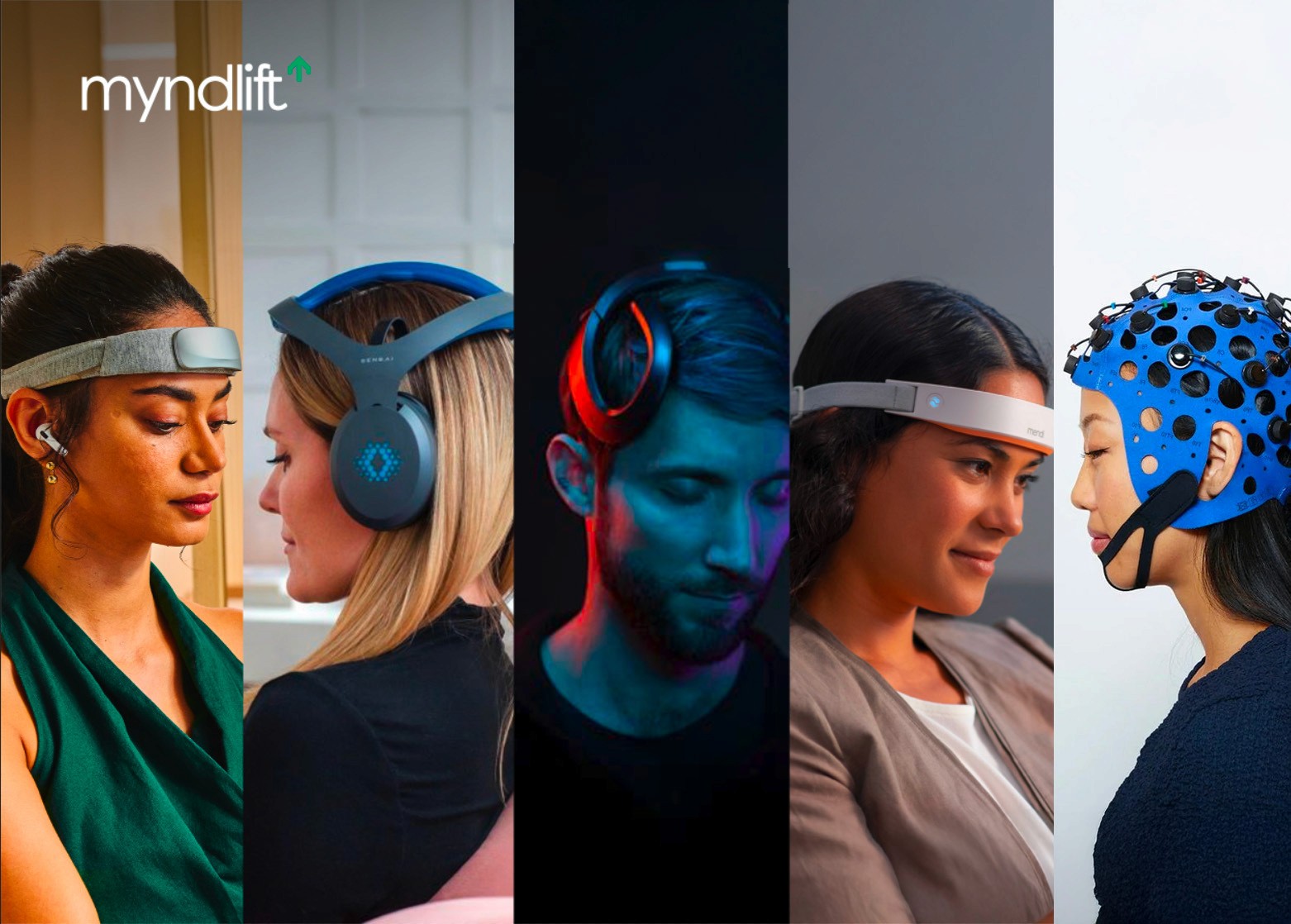
Neurofeedback: This brain-training method helps you regulate theta waves. If you’re training at home, you’ll use a brain-sensing headband and a neurofeedback app to track brain activity and receive rewards when your brain activity moves toward a desired pattern (for example, specific theta levels in certain regions), helping it learn to self-regulate over time.
Final thoughts
We don’t just need optimal theta wave activity in order to get a good night’s sleep, but for normal day-to-day function. This brain state is linked to everything from how you feel to how you react, and is associated with memory formation and learning. And while we know a lot about theta waves, there’s still plenty to be uncovered about this fascinating, restful state of being.
Myndlift provides a personalized, expert-guided brain health program that can help you elevate your wellbeing by improving your sleep quality, focus, calm, and self-control over mood. Take this 10-second quiz to check if you’re eligible to kick-start your journey for better brain health
FAQs
What are theta brain waves?
Theta waves are slow brainwave frequencies (4–8 Hz) that appear during light sleep, the transition into sleep, early waking, and certain relaxed or internally focused states while you’re awake.
When do theta waves show up during the day or night?
Theta activity increases in stage 1 sleep, in the drifting moments before falling asleep, and as you’re waking. It can also appear during wakefulness in states like meditation, deep relaxation, and creative thinking.
Are theta waves linked to creativity?
Yes. Research shows that theta-rich states, particularly during the hypnagogic drift or deep relaxation, can support insight and creative problem-solving. Many people experience sudden ideas or clarity after short naps or meditative states.
How do theta waves relate to memory?
Theta rhythms help the brain bind information into a coherent memory. They’re involved in both forming and recalling memories, and increased theta activity in some practices has been linked to improved memory performance.
Can too much or too little theta activity be a problem?
Yes. Unusual theta patterns can relate to trouble focusing, mental fogginess, sleep difficulties, or issues recalling information. Elevated theta during wakefulness is often observed in ADHD.
Can I increase theta waves naturally while awake?
Yes. Meditation, slow breathing exercises, relaxation practices, and even certain moments of creative flow can increase theta activity. Good sleep habits and neurofeedback may also support healthy theta patterns.
Can I feel when I’m in a theta state?
Not directly. You can’t feel brainwaves, but you may notice the mental state associated with theta, like drifting toward sleep, entering deep relaxation, or experiencing a creative or introspective moment.
About the checker:
Haining Cui, Ph.D.
Haining Cui, PhD, is a data-driven neurolinguist with deep expertise in neurocognitive research. He specializes in data analysis, statistical modeling, and experimental design, turning complex datasets into actionable insights.
References
Patel AK, Reddy V, Shumway KR, Araujo JF. Physiology, sleep stages. In: StatPearls [Internet]. Treasure Island (FL): StatPearls Publishing; 2024 Jan. https://www.ncbi.nlm.nih.gov/books/NBK526132/
Bódizs, R., Sverteczki, M., & Mészáros, E. (2008). Wakefulness–sleep transition: Emerging electroencephalographic similarities with the rapid eye movement phase. Brain Research Bulletin, 76(1), 85–89. https://doi.org/10.1016/j.brainresbull.2007.11.013
Sharma, K., Achermann, P., Panwar, B., Sahoo, S., Pascual-Marqui, R. D., Faber, P. L., & Ganesan, R. A. (2023). High Theta–Low Alpha Modulation of Brain Electric Activity During Eyes-Open Brahma Kumaris Rajyoga Meditation. Mindfulness, 14(7), 1674–1688. https://doi.org/10.1007/s12671-023-02163-y
Brain waves. ScienceDirect Topics. Elsevier. https://www.sciencedirect.com/topics/agricultural-and-biological-sciences/brain-waves
Oskouei SY, Mansouriyeh N. The effectiveness of brain wave synchronization in the theta band on depression and anxiety in opioid-dependent patients. Addict Health. 2024 Oct 29;16(4):248–252. PMID: 39944389; PMCID: PMC11811546. https://pmc.ncbi.nlm.nih.gov/articles/PMC11811546/
Boynton, T. (2001). Applied Research Using Alpha/Theta Training for Enhancing Creativity and Well-Being. Journal of Neurotherapy, 5(1–2), 5–18. https://doi.org/10.1300/J184v05n01_02
Zeiner-Gundersen SA. Unlocking your creativity: the power of the theta brainwave state. Preprint. ResearchGate. October 2024. https://www.researchgate.net/publication/384763171_Unlocking_Your_Creativity_The_Power_of_the_Theta_Brainwave_State
Houser K. Einstein, Edison, and Dali’s “creative nap” trick seems to actually work. Big Think. January 2, 2022. https://bigthink.com/neuropsych/creative-nap/
Herweg, N. A., Solomon, E. A., & Kahana, M. J. (2020). Theta Oscillations in Human Memory. Trends in Cognitive Sciences, 24(3), 208–227. https://doi.org/10.1016/j.tics.2019.12.006
Anders M, Grieder M, Iselin L, Koenig T, Schimmelmann BG, Strik W, et al. Brain oscillations and creativity: a resting-state EEG study. Heliyon. 2021 Apr;7(4):e06829. doi: 10.1016/j.heliyon.2021.e06829. PMID: 33868892. https://www.sciencedirect.com/science/article/pii/S2352289521000916
Peng Z, Du Y, Wang Y, Luo C, Yin Y, Liu Q, et al. Correlation between emotional state and high-frequency EEG features during music listening. Heliyon. 2024 May 10;10(5):e28024. doi: 10.1016/j.heliyon.2024.e28024. PMID: 38854482. https://www.sciencedirect.com/science/article/pii/S2405844024106123
Sauseng P, Klimesch W, Schabus M, Doppelmayr M. Frontoparietal EEG coherence in theta and upper alpha reflect central executive functions of working memory. Int J Psychophysiol. 2005 Jul https://pmc.ncbi.nlm.nih.gov/articles/PMC6612457/
Institute of Medicine (US) Committee on Sleep Medicine and Research; Colten HR, Altevogt BM, editors. Sleep disorders and sleep deprivation: an unmet public health problem. Washington (DC): National Academies Press (US); 2006. https://www.ncbi.nlm.nih.gov/books/NBK19961/
Buzsáki G. Theta oscillations in the hippocampus. Neuron. 2002 Jan https://pubmed.ncbi.nlm.nih.gov/15797181/
Hermens DF, Soei EXC, Clarke SD, Kohn MR, Gordon E, Williams LM. Resting EEG theta activity predicts cognitive performance in attention-deficit hyperactivity disorder. Pediatr Neurol. 2005 Apr https://pubmed.ncbi.nlm.nih.gov/15797181/
Bailey NW, Trawley SL, Corr PJ, Fitzgerald PB, Rogasch NC. Resting EEG alpha activity predicts individual differences in creativity. Sci Rep. 2021 Dec 1;11(1):22901. doi: 10.1038/s41598-021-02127-3. PMCID: PMC8633885. https://pmc.ncbi.nlm.nih.gov/articles/PMC8633885/
Munir M, Ahmed F, Tariq Q, Iftikhar N, Naseer A, Anwar SM. EEG-based emotion recognition using multiple spectral and temporal features. Front Neurosci. 2023 https://pmc.ncbi.nlm.nih.gov/articles/PMC10622034/
Heck, D. H., McAfee, S. S., Liu, Y., Babajani-Feremi, A., Rezaie, R., Freeman, W. J., Wheless, J. W., Papanicolaou, A. C., Ruszinkó, M., Sokolov, Y., & Kozma, R. (2017). Breathing as a Fundamental Rhythm of Brain Function. Frontiers in Neural Circuits, 10. https://doi.org/10.3389/fncir.2016.00115
Yang X, Xu S, Yuan Z, Zhang Y, Gao Q, Xu Z, et al. Theta band EEG oscillations reflect the internal process of insight problem solving. Sci Rep. 2023 Jul https://www.nature.com/articles/s41598-023-38313-4
Related posts