Updated: August 7, 2026
This article explains how modern brain scans work, where they’re used, and how accessible they have become.
Differences between structural scans (MRI, CT) and functional scans, such as EEG, fMRI, or PET.
What EEG measures, and how brainwave patterns are interpreted.
Three practical ways people get EEG today: in-clinic assessments, provider-guided at-home scans, and self-serve Brain Snapshots.
Typical use cases and price ranges, so you can choose the right level of measurement.
How measurement replaces guesswork when testing habits, routines, and interventions.
How brain scans can inform next steps like neurofeedback and why repeated scanning matters.
For a long time, brain scans felt out of reach. Something you only get if a doctor orders it or you’re part of a research study.
That’s no longer the case.
Today, some brain scans, especially EEG-based ones, are used to explore everyday things like focus, stress, sleep, and mental performance, and they’re far more accessible than most people think.
That’s why they’re showing up in unexpected places.
For example, Kim Kardashian has shared getting a brain scan as part of a wellness checkup. Around the same time, researchers studying Alex Honnold, the free climber who scales cliffs without ropes, found something striking: his amygdala barely reacts to threats that would trigger anxiety in most people.
But how do you actually get a brain scan, and which kind should you be looking for?
Not all brain scans are the same
When we say “brain scan,” we’re often talking about very different tools as if they were the same. In reality, they answer different kinds of questions.
Some scans look at structure: MRI and CT scans show anatomy, things like injuries, lesions, or physical changes in the brain. They’re crucial in medical settings, but they don’t capture how the brain works moment to moment.
Other scans look at function: Tools like EEG, fMRI, or PET measure brain activity, directly or indirectly, during mental engagement, stress, or rest. These are used when the question isn’t “is something wrong?” but “how is this brain working?”
If you’re trying to understand everyday mental states, the functional side is where the insight is.
EEG is designed for that purpose.
What an EEG brain scan actually measures
Your brain runs on electrical signals. Billions of neurons fire in repeating rhythms, and EEG (electroencephalography) sensors on the scalp pick up those patterns in real time.
The patterns show up as brainwaves, each linked to different mental states:
• Faster waves (like beta and gamma), often associated with effort, stress, or intense mental activity
• Mid-range waves (like alpha), linked to calm focus or relaxed alertness
• Slower waves (like theta and delta), more present during deep relaxation, drowsiness, or sleep
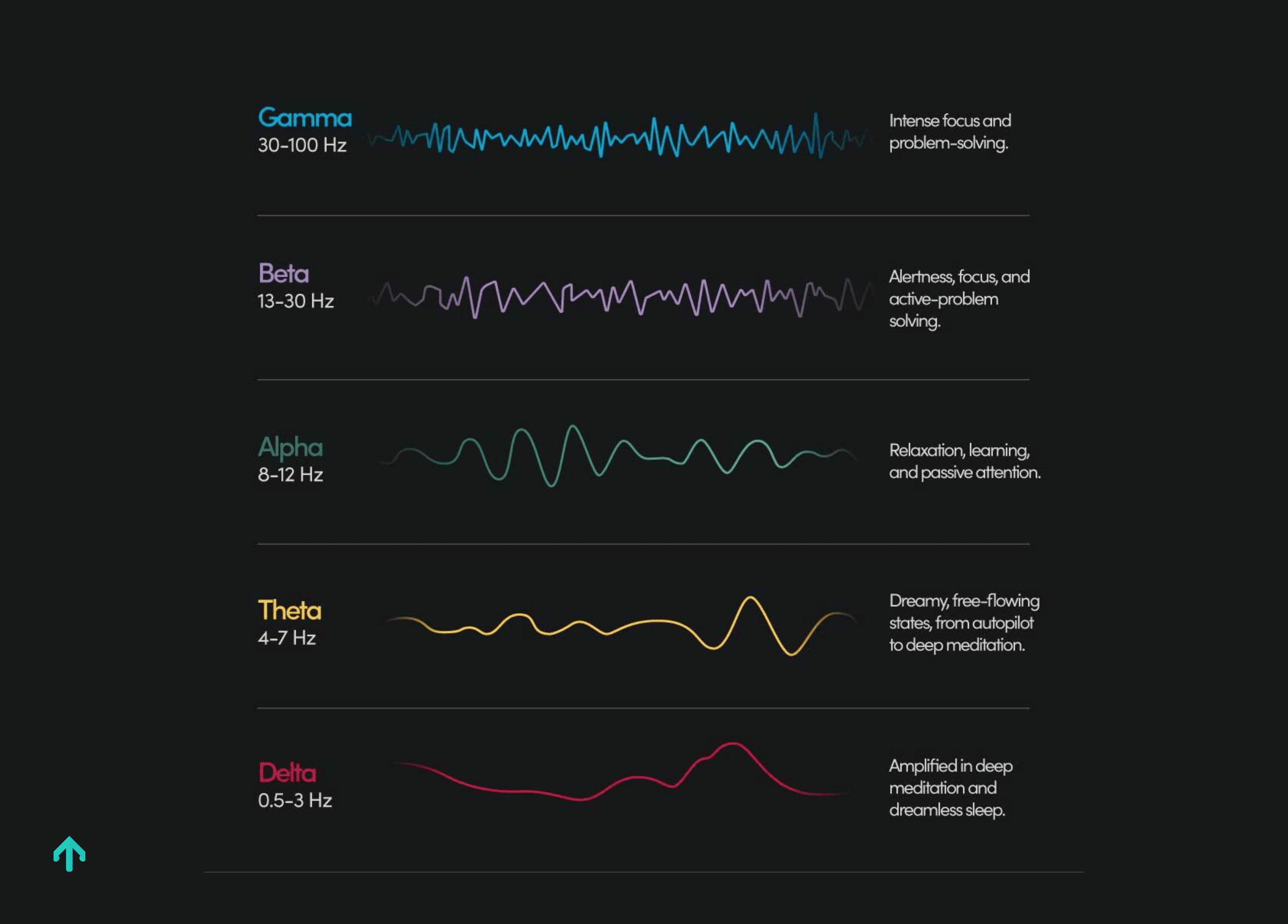
Taken together, these features describe how your brain is functioning as a pattern. In qEEG (quantitative electroencephalography), that pattern is quantified and compared against large normative databases to show how your brain activity relates to population averages.
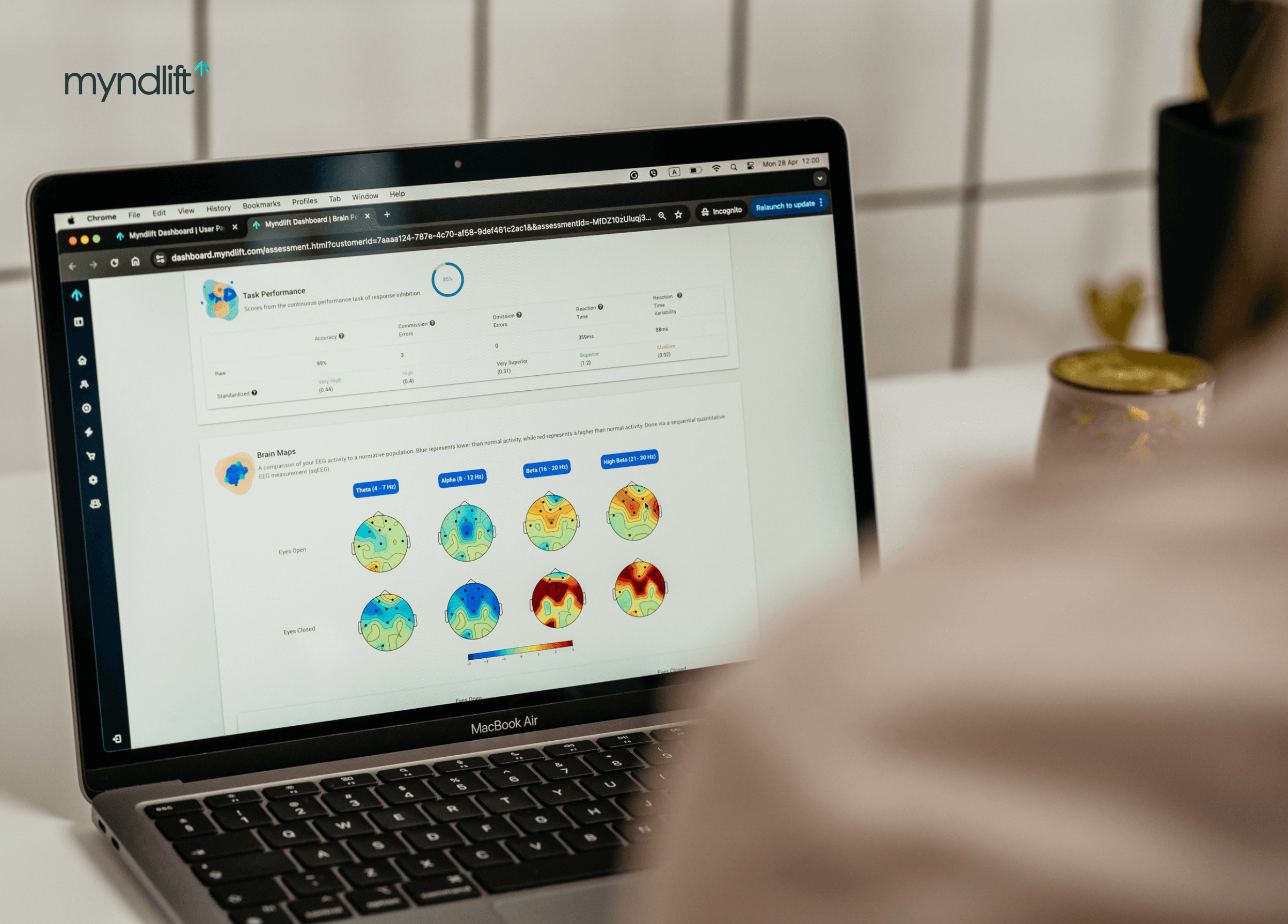
The three main ways people get qEEG brain scans today
There isn’t a single path to getting a qEEG brain scan. The right option depends on how much detail you want, how often you want to measure, and what level of professional support you need.
1. Choose an in-clinic qEEG if:
You want in-person clinical oversight and the highest-resolution view of brain activity. This option is especially appropriate when brain data is part of a broader diagnostic process.
For example, a licensed clinician records an in-clinic qEEG during a diagnostic assessment and uses the results, together with clinical history and in-person observation, to support diagnosis or guide next steps.
Practical considerations
Cost: Typically $500–$2,000+ for an assessment
Access: Requires visiting a specialized clinic
Frequency: Can be repeated periodically to track change, but it’s not designed for regular tracking
2. Choose an at-home brain scan with a provider if:
You want clinically informed insight but need flexibility.
At-home qEEG recordings are done at home, while a provider reviews the data remotely to interpret patterns and guide next steps. This approach does not provide a clinical diagnosis.
Platforms like Myndlift offer comprehensive at-home programs built around qEEG, often combined with ongoing support or training, without frequent in-clinic visits.
Practical considerations
Cost: Starts at around $150, depending on what’s included (number of scans, neurofeedback brain training, provider support)
Access: Requires a provider offering remote qEEG review
Frequency: Can be repeated periodically to track change
3. Choose quick Brain Snapshots (self-serve qEEG) if:
You want fast, low-friction insight into how your brain responds to everyday conditions.
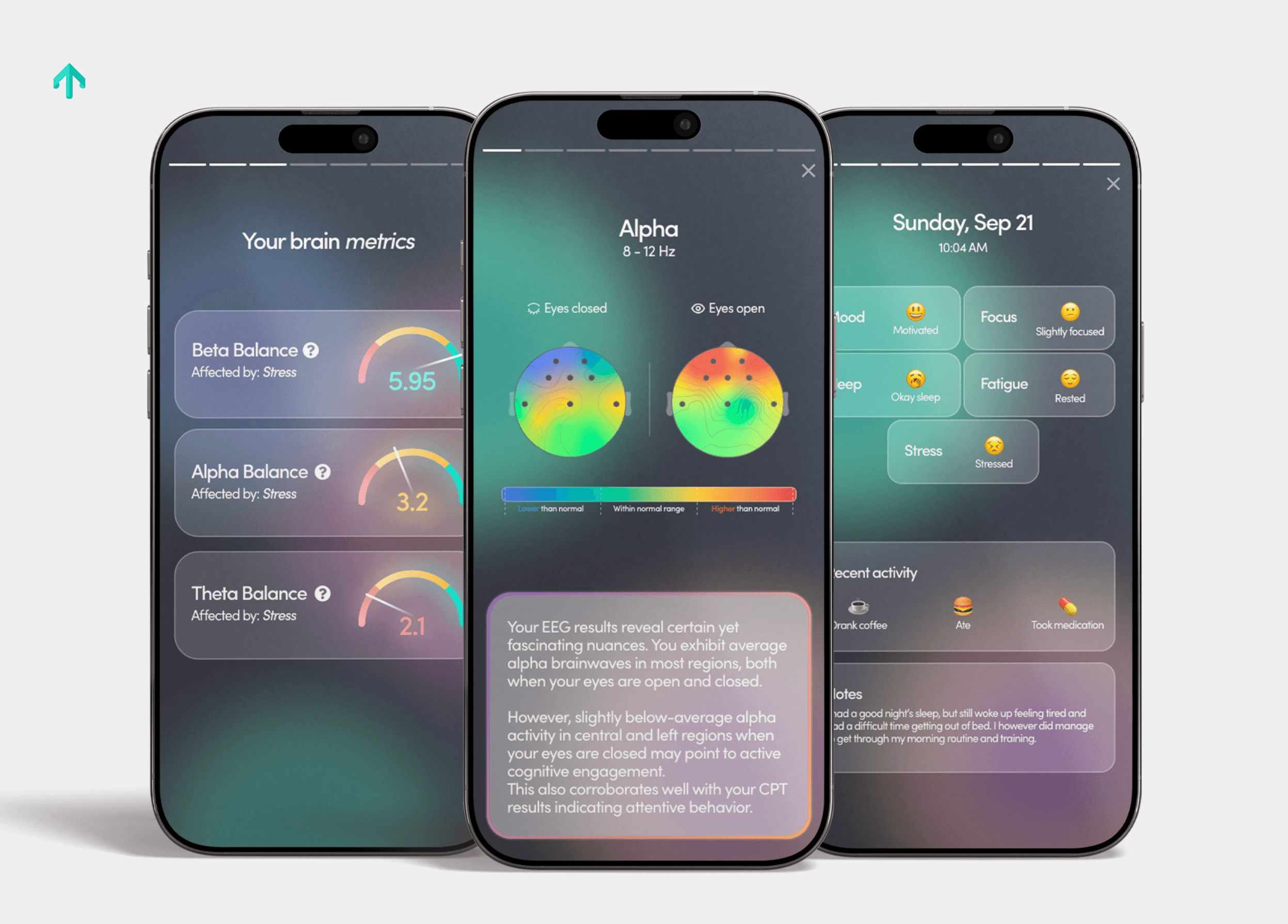
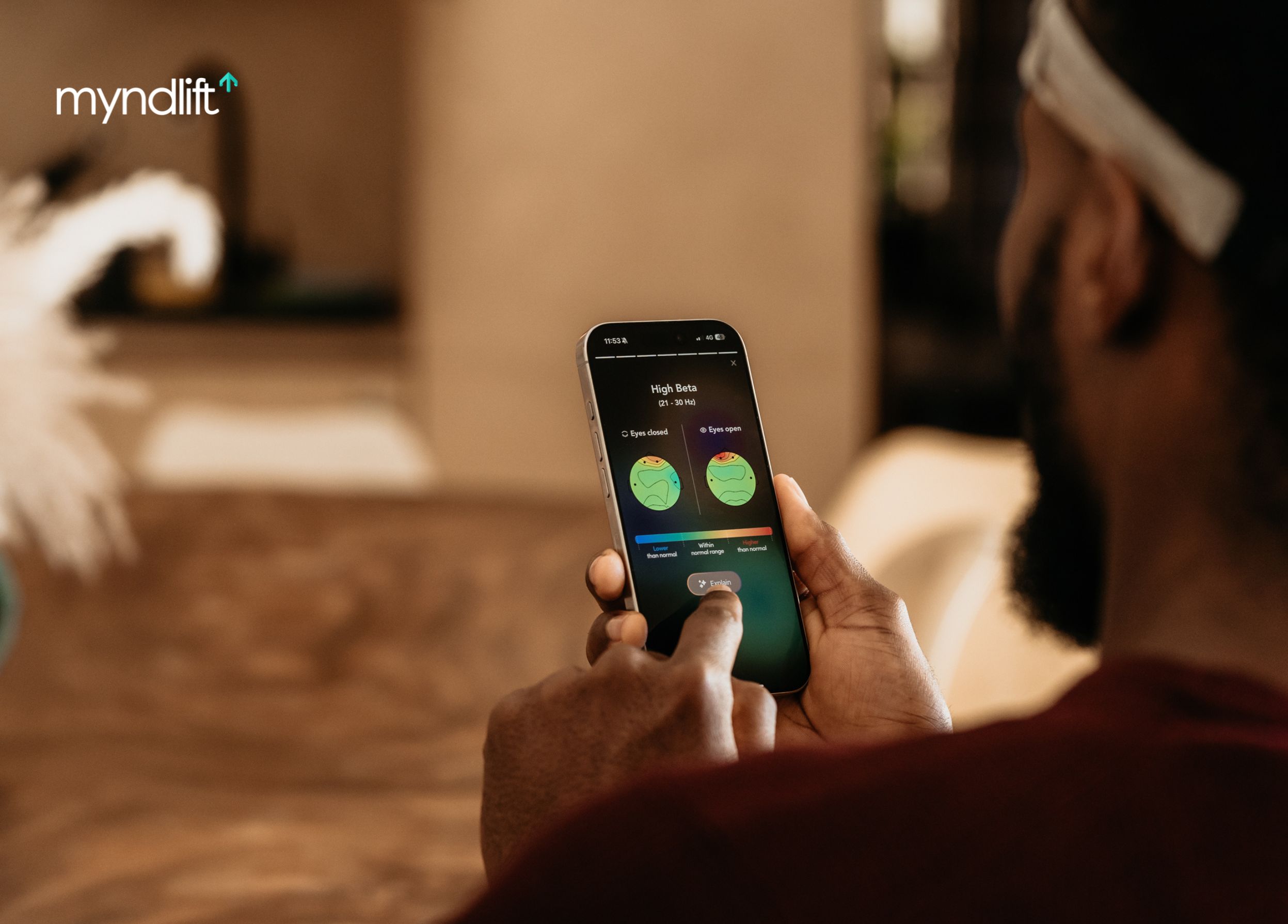
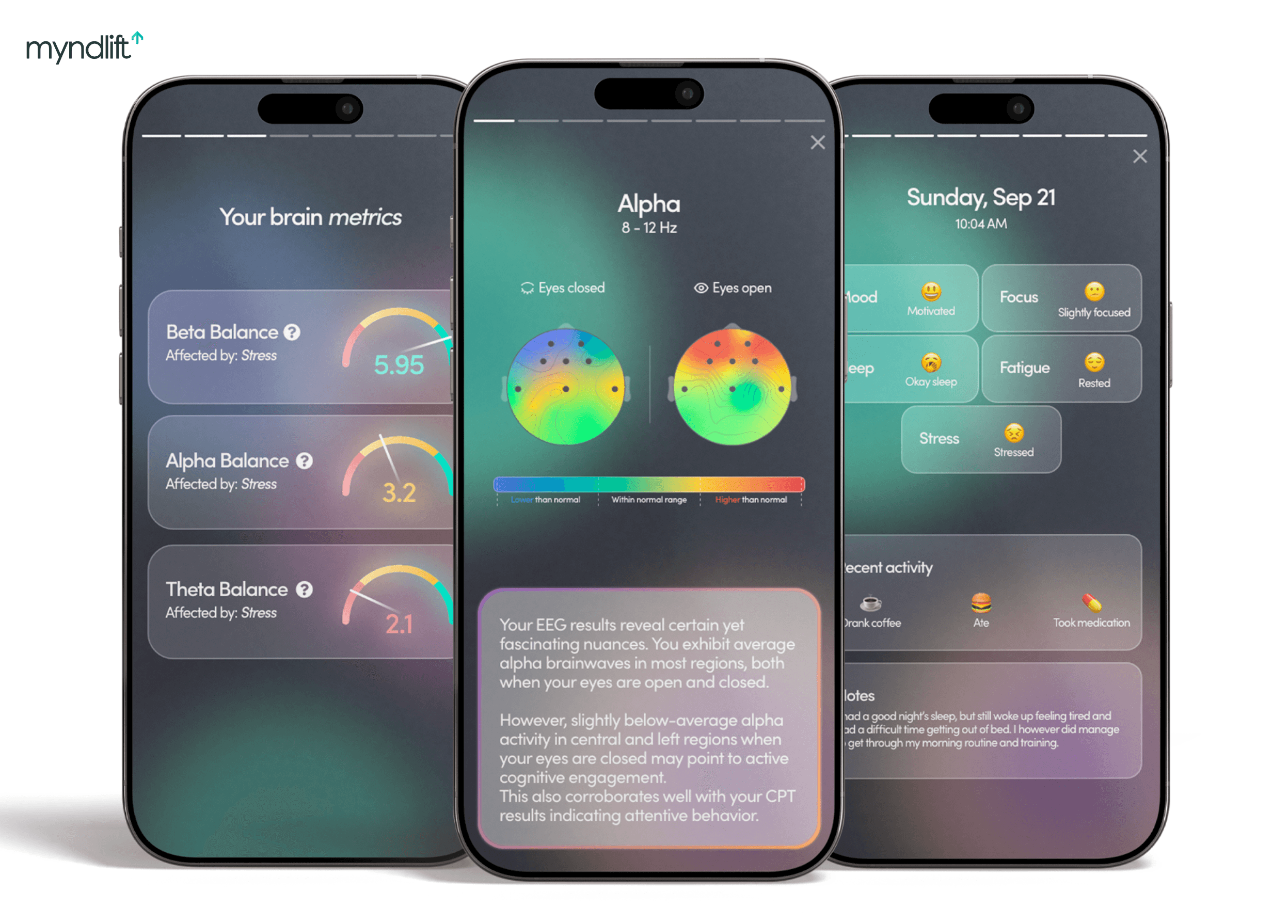
Brain Snapshots are short, 3-minute recordings designed for frequent use. They let you compare your brain activity before and after simple, real-world changes, like meditation, caffeine, exercise, or brain training, and see what actually shifts.
They don’t replace a full clinical qEEG. They’re built to make small, day-to-day changes visible.
Practical considerations
Cost: $25–$150 per month
Access: Can be done independently with Myndlift
Frequency: Designed for repeat use and pattern tracking
Brain scan methods compared
The table below compares common brain scan methods by purpose, access, and cost.
Method | What is shows | At-home option | Best for | Price range |
MRI/CT | Brain structure (anatomy) | ❌ | Injuries, tumors, structural issues | $1,000–$3,000+ |
fMRI | Brain activity via blood flow | ❌ | Research studies | $2,000–$5,000+ |
In-clinic qEEG | Electrical brain activity (high-resolution mapping) | ❌ | Comprehensive brain mapping when maximum detail is needed, including therapeutic customization or neurofeedback | $300–$1,500 |
At-home qEEG | Electrical brain activity (mid-resolution mapping) | ✅ | The same purpose as in-clinic qEEG, but optimized for accessibility and tracking patterns over time | Starts at ~$150, varies by scope |
Brain Snapshots | Electrical brain activity (focused markers) | ✅ | Quick day-to-day tracking and self-experimentation | $25–$150 per month |
Why measuring beats guessing
Most people try things like supplements, meditation, breathwork, or cold exposure to feel better or perform better. Sometimes it helps, sometimes it doesn’t, and without measurement, it’s hard to tell what actually changed.
A qEEG scan, whether done in-clinic or at home, makes those changes visible by establishing a baseline and showing how brain patterns shift over time, which can inform more tailored, longer-term decisions.
Brain Snapshots play a different role. They make it easy to test small, everyday variables, like coffee versus matcha, training in the morning versus the afternoon, or how your brain responds on a high-stress workday, and see patterns emerge over time.
Together, this turns trial and error into something you can actually observe.
From measurement to change
Seeing how your brain is functioning opens the door to targeted change.
Once you have a clear picture of your brain patterns, that information can be used to guide next steps. One common option is neurofeedback, which uses real-time brain data to help your brain practice specific states, like sustained focus or calm.
You wear a headband that tracks your brainwaves while you play simple games or watch videos. When your brain activity moves into the target range, for example, a more focused or regulated state, you get immediate feedback. The screen might get brighter, or the sound might increase.
Over time, this feedback helps your brain learn to reach and maintain those states more reliably, whether the goal is focus, relaxation, performance, or overall wellbeing.
You can then scan again and see how those patterns have changed.
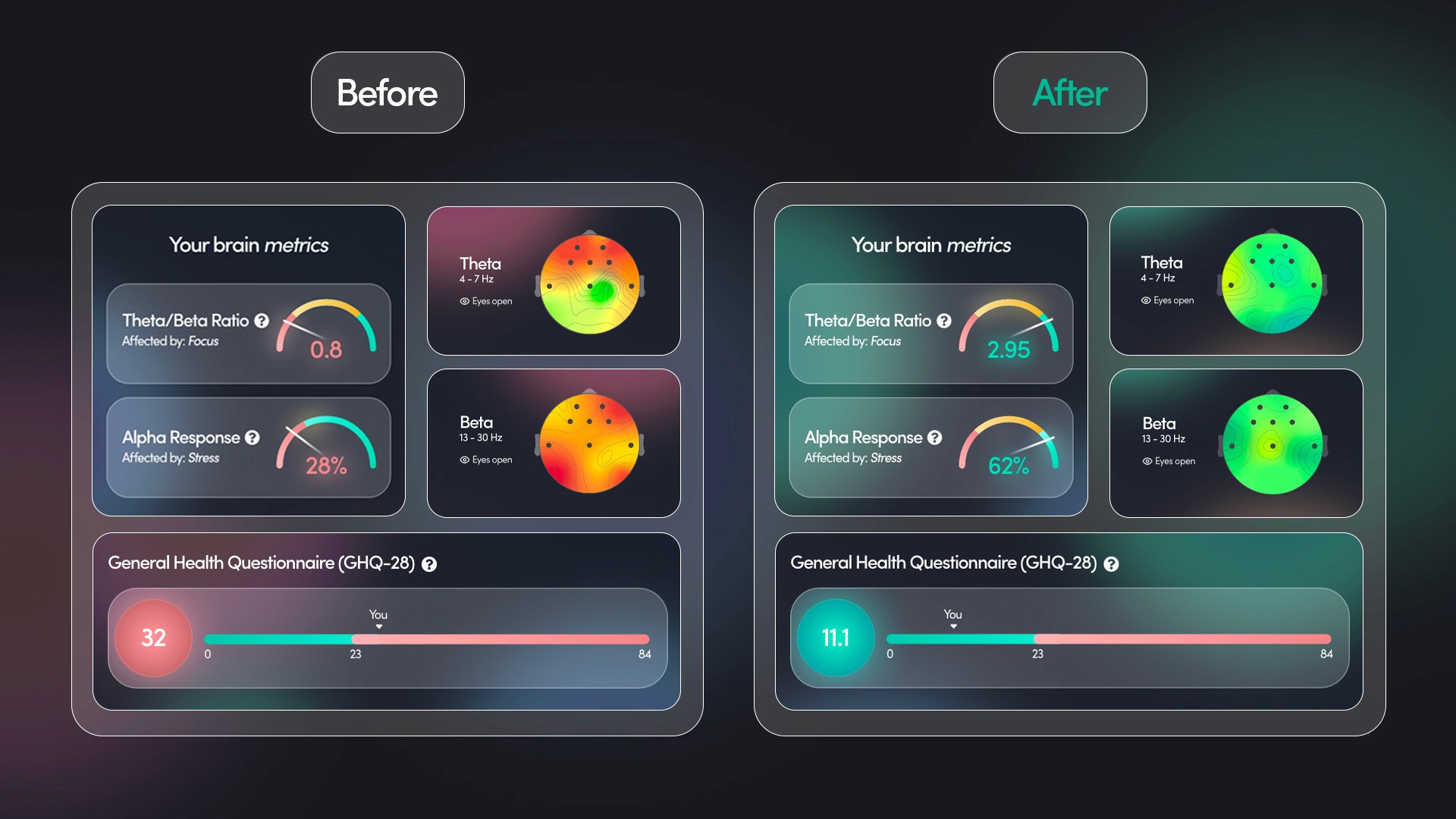
That scan–train–scan loop is the part most people are still missing.
The strange thing isn’t that celebrities or elite performers are scanning their brains. It’s that most of us still aren’t, even though we already track steps, sleep, and heart rate every day.
That gap is finally closing.
FAQs
How can I get a brain scan?
People usually get a brain scan either through a hospital or clinic (for medical imaging like MRI or CT), or through providers offering functional scans, such as EEG, which can be done without a referral.
What kind of brain scan shows focus, stress, or mental performance?
Functional brain scans are used for that. Brain Snapshots and full qEEG assessments measure brain activity directly, while tools like fMRI or PET measure activity indirectly and are usually limited to research or hospital settings.
What’s the difference between an MRI and an EEG?
An MRI shows brain structure, things like injuries or physical abnormalities. An EEG shows brain activity, capturing how the brain is functioning moment to moment through electrical signals.
Can you get a brain scan at home?
Some types, yes. EEG-based scans can be done at home using wearable sensors, often with remote review by a provider. Structural scans and most hospital-based imaging cannot be done at home.
How much does a brain scan cost?
Costs vary widely by scan type. MRI and CT scans can cost thousands of dollars. EEG-based scans range from a few hundred dollars for a full assessment to lower monthly costs for short, repeatable scans used for tracking.
Related posts