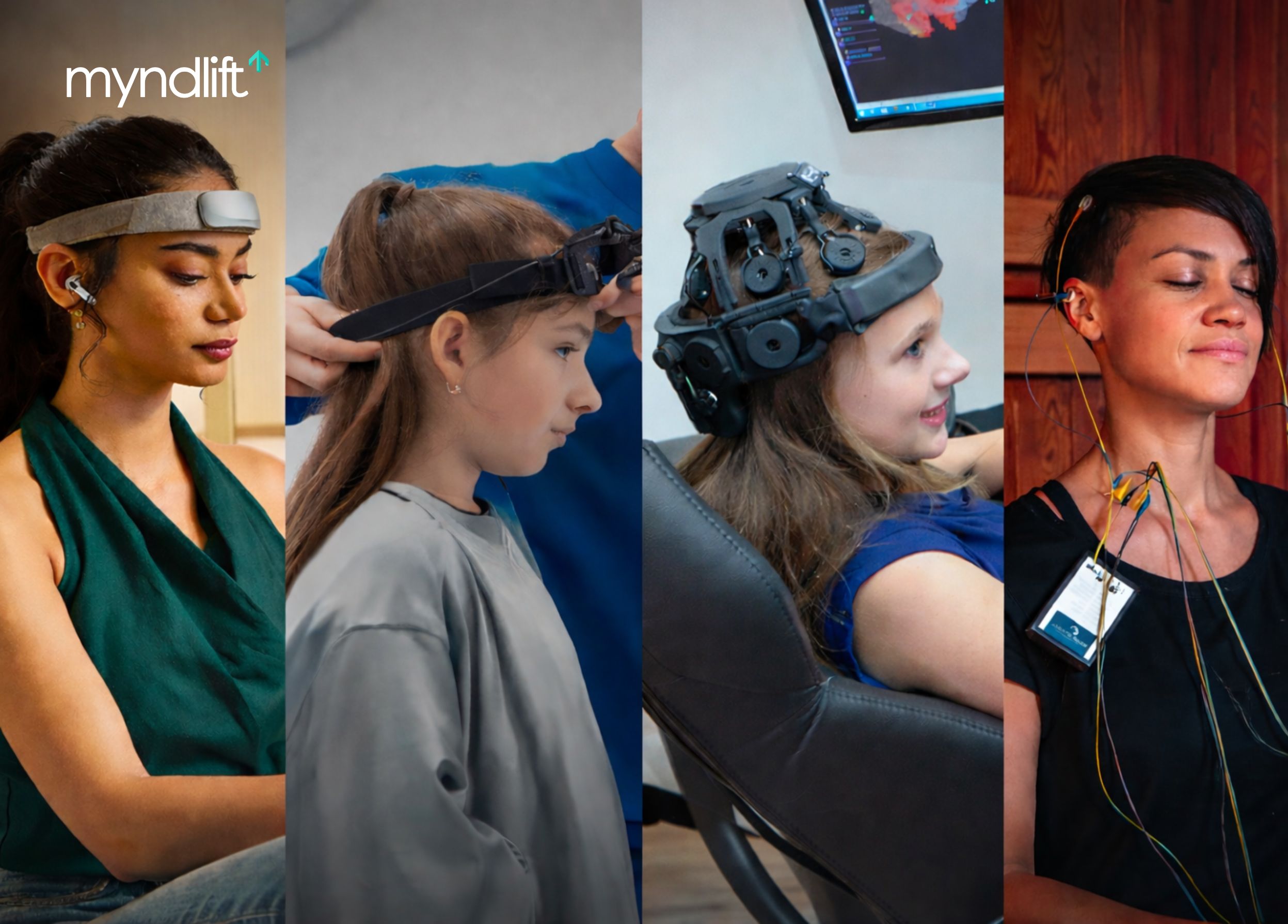
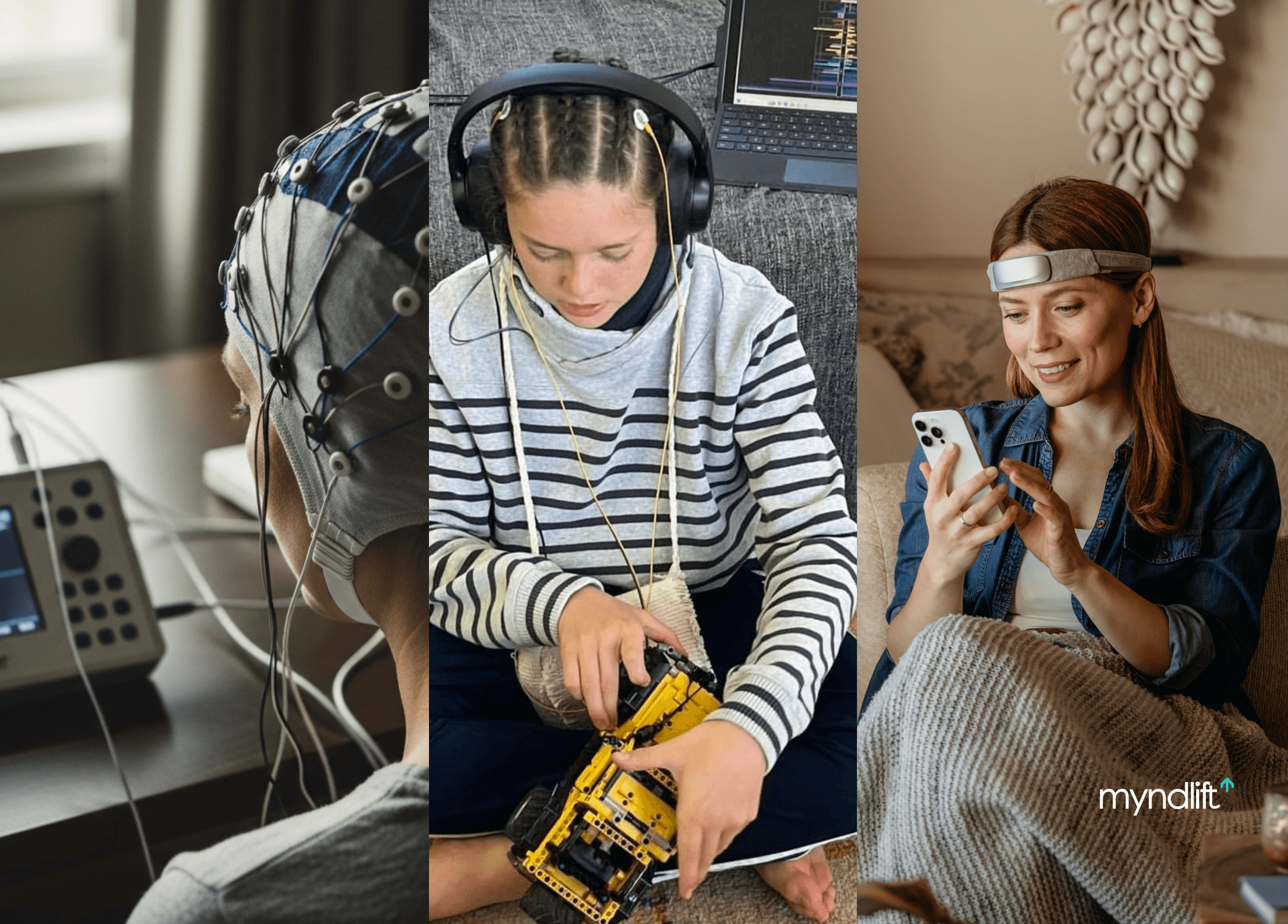
This guide compares neurofeedback platforms for clinicians based on training style, assessments, remote care, ease of use, and scalability.
Some systems focus on advanced multichannel EEG and qEEG analysis, while others prioritize hybrid care, client engagement, or simpler delivery.
Neurofeedback methods vary significantly, from targeted protocol-based training to dynamic, non-directive approaches.
Certain platforms combine neurofeedback with HRV, EMG, respiration, and other biofeedback modalities for broader nervous system regulation work.
The best platform depends on your workflow, the type of clients you work with, and how hands-on you want the training process to be.
Most neurofeedback platforms look great during a demo.
Then the real questions come up.
Will this fit my workflow? How flexible are the protocols? Can clients train remotely? Will this still work for me a few years from now?
Many choose a system based on a recommendation, a familiar name, or one standout feature, only to realize later it doesn't fit the way they actually want to practice.
This guide compares five leading platforms for 2026, including Myndlift, BrainMaster, Thought Technology, NeurOptimal, and NeuroGuide, so you can evaluate each one against how you actually work.
Quick comparison
Platform | Neurofeedback approach | Remote use | Built-in assessments | Learning curve | A strong fit for |
Myndlift | Linear + multimodal (EEG/fNIRS) | ✅ | ✅ | Easy-Moderate | Clinics wanting remote or hybrid care |
BrainMaster | Linear, LORETA | Limited | ✅ | Steep | Complex in-clinic cases |
Thought Technology | Linear, Infra-Low Frequency | Limited | Partial | Moderate–steep | Clinics combining neurofeedback and biofeedback |
NeurOptimal | Dynamic | ✅ | ❌ | Easy | Wellness-focused simplicity |
NeuroGuide | qEEG / assessment-focused | ❌ | ✅ | Moderate–steep | Advanced qEEG analysis |
Four questions worth answering before you choose
1. What kind of training do you want to deliver?
Some methods use predefined training goals. You decide in advance which brainwave patterns to train based on your client’s assessments and symptoms.
This approach allows you to personalize training plans for clients with specific goals, such as improving attention, reducing anxiety or PTSD-related symptoms, improving sleep, or enhancing performance.
Other methods skip predefined targets entirely. The system reacts to moment-to-moment changes in brain activity as they happen, with the goal of improving overall regulation rather than training toward a specific outcome. It’s often used for more general wellness and self-regulation training.
Methods also vary in complexity. While some work well remotely or at home, others require technical setups and in-clinic supervision.
The main approaches used today include linear neurofeedback, Infra-Low Frequency (ILF), LORETA, and dynamic neurofeedback.
2. Do your clients need to train at home?
Certain neurofeedback systems are built around in-clinic workflows. You handle setup, electrode placement, and session adjustments directly.
This offers deeper technical control but is harder to scale and often requires more staff, training, or workarounds for home use.
Platforms designed for hybrid care simplify setup, support remote monitoring and protocol adjustments, and make it easier for clients to train from home while keeping you in the loop.
3. How much do assessments matter to your workflow?
Getting a baseline can look very different from platform to platform.
Some systems rely mostly on symptom questionnaires, while others combine qEEG brain maps, cognitive testing, symptom tracking, and ongoing progress monitoring in one place.
This matters if you want a more data-driven workflow, objective before-and-after comparisons, or fewer disconnected tools throughout the client journey.
4. Where do you want to be in three years?
The right platform is not just about how you practice today, but how you want to grow over time.
A system built around advanced in-clinic workflows may offer deeper technical control but can be harder to scale remotely. Platforms designed for hybrid care are often easier to expand across larger client loads, remote programs, or multi-clinician practices.
This matters because switching systems later can be time-consuming for both you and your clients, especially once workflows, training approaches, and historical data are already built into the practice.
My biggest constraint is… | Worth exploring |
Clients who can't come in regularly | Myndlift, NeurOptimal |
Complex cases that don't respond to standard approaches | Brain Master, Thought Technology |
Wanting data and assessments, not just symptom reports | NeuroGuide, Myndlift |
Growing my practice over the next few years | Myndlift |
Wanting to offer neurofeedback without becoming a neurofeedback practitioner | Myndlift’s hands-free neurofeedback program (Nasia) |
1. Myndlift
Best for: Scaling remote or hybrid care without sacrificing clinical depth
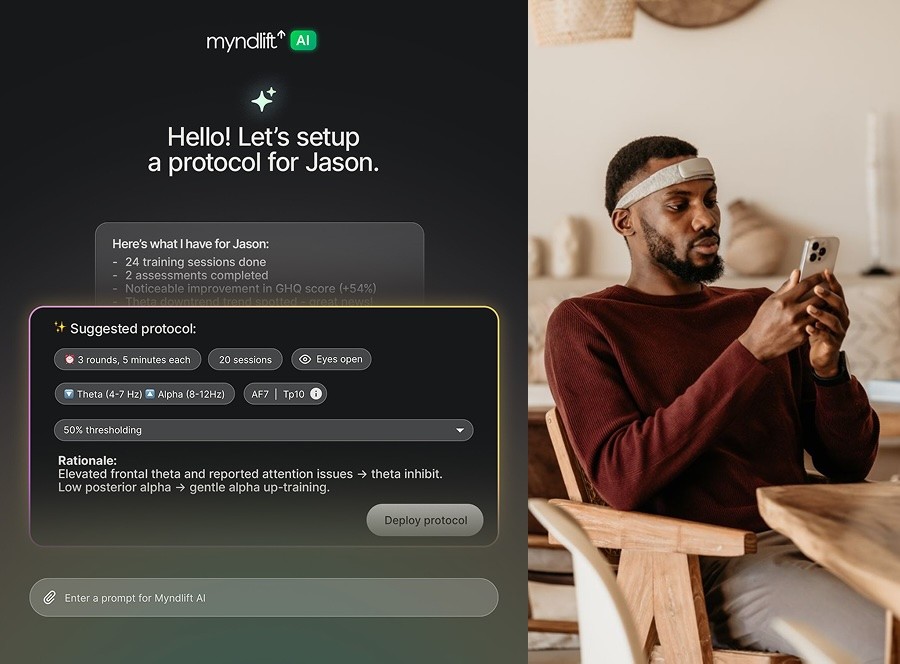
Myndlift is built around the assumption that not all your clients can or will come to your office every week, and that you shouldn't have to choose between clinical rigor and accessibility.
What sets it apart from other remote-capable platforms is that the remote access isn't an add-on: the whole workflow is designed around it. You adjust protocols, review session data, and monitor progress without the client being in the room.
What makes it stand out:
Full remote dashboard: Monitor and adjust training plans between sessions. You can also scale in-office, with multiple clients training simultaneously under one clinician.
All-in-one platform: qEEG brain maps, CPTs, questionnaires, and progress tracking in one place, no tool-switching required.
Less manual review: Myndlift’s AI Clinical Assistant analyzes assessments, tracks patterns across sessions, and surfaces next-step training plan suggestions. You also get a dedicated team member for onboarding and staff training, plus unlimited client tech support.
Built for engagement: Myndlift offers clients multiple training formats, including games, streaming, and adaptive sound-based sessions, making neurofeedback more engaging and easier to stay consistent with long-term.
Pricing: Starting around $2,990; varies by package.
Not the best fit if: You want multichannel EEG setups with 19+ electrodes and highly custom in-clinic workflows.
Note: If you're not ready to run neurofeedback yourself, their hands-free option (Nasia) lets you refer clients directly to Myndlift's Neuro Coaches, who handle everything from onboarding and hardware shipping to assessments and ongoing training supervision. You can follow the client's progress through your clinical dashboard.
2. BrainMaster
Best for: In-clinic practices built around diagnostically complex cases
BrainMaster is for clinicians working with complex, hard-to-treat cases where standard protocols aren't cutting it. The platform is built around diagnostic precision, giving you a detailed neurological picture before you design any training.
It's also FDA-cleared, which matters if you're positioning your practice around clinical-grade diagnostics or justifying premium fees.
What makes it stand out:
Broad protocol flexibility: Supports traditional linear neurofeedback, LORETA-based workflows, and more advanced multichannel EEG setups, which can be useful if you’re working with complex cases that require deeper assessment, more electrode sites, or highly customized protocol design.
Advanced brain imaging options: Includes 3D brain mapping and cortical activity visualization tools used in more detailed qEEG analysis workflows.
Established clinical ecosystem: Longstanding presence in clinical neurofeedback, education, and practitioner training.
Pricing: Systems typically start in the $5,000–$15,000+ range, depending on configuration.
Not the best fit if: You want to run a remote or hybrid model, or scale to high client volume without in-person sessions.
3. Thought Technology
Best for: Clinicians combining neurofeedback with broader biofeedback modalities
If you're treating trauma, chronic pain, or high-performance clients where what's happening in the body matters as much as what's happening in the brain, Thought Technology gives you both in a single system.
You can monitor HRV, breathing, EMG (electrical activity in response to nerve stimulation of the muscle), skin conductance, and temperature alongside EEG.
What makes it stand out:
Simultaneous brain and body monitoring: see the full stress response during a session.
Modular system design: Wide range of hardware and software configurations depending on the practice setup. You can start with a basic two-channel system and plug in advanced modules later as your practice grows.
Established biofeedback ecosystem: Longstanding presence across clinical biofeedback, rehabilitation, and performance settings.
Pricing: Varies based on hardware, modules, and software configuration.
Not the best fit if: You focus purely on neurodevelopmental work like ADHD, or you want a simple plug-and-play neurofeedback-only workflow.
4. NeurOptimal
Best for: Wellness-focused practitioners who want a fully automated, hands-off system
NeurOptimal takes a deliberately different philosophy: the system runs itself. It detects shifts in brain activity and adjusts without you managing protocols session to session. There's no assessment, no individualized protocol design, and very little clinician involvement beyond setup.
This is either a feature or a dealbreaker depending on what you're trying to do. For general wellness, resilience training, or home rental programs where clinical precision isn't the point, it's a genuinely clean solution. For clinical work with specific symptom targets, it's the wrong tool.
What makes it stand out:
Fully automated delivery: no protocol management required.
Lower operational complexity: Less hands-on setup and clinician involvement compared to many traditional systems.
Non-directive training approach: Uses dynamic neurofeedback to mirror the brain's activity back to itself rather than forcing it toward specific targets, reducing the risk of overtraining side effects.
Pricing: $5,995–$9,995 to purchase; rental model available.
Not the best fit if: You want individualized protocols, clinical assessments, or the ability to adjust training based on client progress.
5. NeuroGuide
Best for: Clinicians who want advanced qEEG brain mapping at the center of their practice
NeuroGuide is less a training delivery platform and more a sophisticated diagnostic engine. Its strength is in qEEG analysis: normative database comparisons, LORETA 3D imaging, and advanced statistical tools that let you build a detailed neurological picture before you design any training.
If qEEG-informed practice is your core differentiator, no other platform on this list matches it for depth. But it's a specialist tool, so most clinicians use it alongside a delivery platform rather than as a standalone.
What makes it stand out:
Advanced brain mapping workflows: Designed for clinicians working with deeper qEEG interpretation and neuroimaging.
Expanded qEEG analysis tools: Includes advanced analysis options like LORETA 3D imaging. This lets you pinpoint exactly which deep cortical structures are contributing to clients' symptoms.
Statistical reporting for pre/post comparisons: Produces research-grade output, paired t-tests, ANOVA, significance testing. Helpful if you need to share findings with a neurologist, submit data for a study, or document outcomes with clinical weight.
Pricing: $3,000–$5,000+ in software licensing; often used alongside a separate training platform.
Not the best fit if: You want a single platform for both assessment and day-to-day training delivery, or you need remote care capabilities.
Find the platform that fits how you actually work
Every platform on this list works. The differences come down to how you practice, who your clients are, and where you want to take your work.
Most offer demos, and the differences become obvious quickly once you run one with your actual workflow in mind.
FAQs
What is the difference between linear and dynamic neurofeedback?
Linear neurofeedback trains specific brainwave patterns based on assessments and training goals. Dynamic neurofeedback reacts to changes in brain activity in real time without predefined targets or protocols, the system adjusts automatically rather than working toward a fixed outcome.
Can neurofeedback be done remotely?
Yes, but remote capability isn't just a software question. Some platforms require hardware or electrode setups that aren't practical outside a clinic. Others are built around hybrid care from the ground up, with remote monitoring, at-home client training, and protocol adjustments handled through a dashboard without the client being in the room.
Do all neurofeedback platforms include qEEG assessments?
No. Some platforms include qEEG brain mapping, cognitive testing, and progress tracking in one place. Others rely on symptom questionnaires or generalized training approaches. The difference matters if you want objective baselines, before-and-after comparisons, or fewer disconnected tools across the client journey.
What is the difference between neurofeedback and biofeedback?
Neurofeedback focuses specifically on brain activity measured through EEG. Biofeedback is broader, it can include HRV, respiration, muscle tension, skin conductance, and temperature alongside or instead of EEG. Some platforms let you monitor both simultaneously, which is useful when what's happening in the body matters as much as what's happening in the brain.
Which neurofeedback platform is easiest to scale in a growing practice?
It depends on what scaling actually looks like for your practice, more clients, more staff, remote programs, or some combination. Platforms designed for hybrid care tend to reduce the per-session operational load: remote monitoring, simplified client onboarding, and the ability to run multiple clients simultaneously without proportionally more staff time. Systems built around highly technical in-clinic workflows offer more precision but are harder to grow without adding headcount.
How do I choose the right neurofeedback platform for my clinic?
The best fit depends on your clinical approach, your clients' needs, and your team's realistic capacity, not just your preferences. A protocol-driven clinician working with complex cases has different requirements than a wellness-focused practitioner running a home rental program. It's also worth thinking about where you want to be in a few years, since switching platforms later means rebuilding workflows, retraining staff, and migrating client data.
Related posts