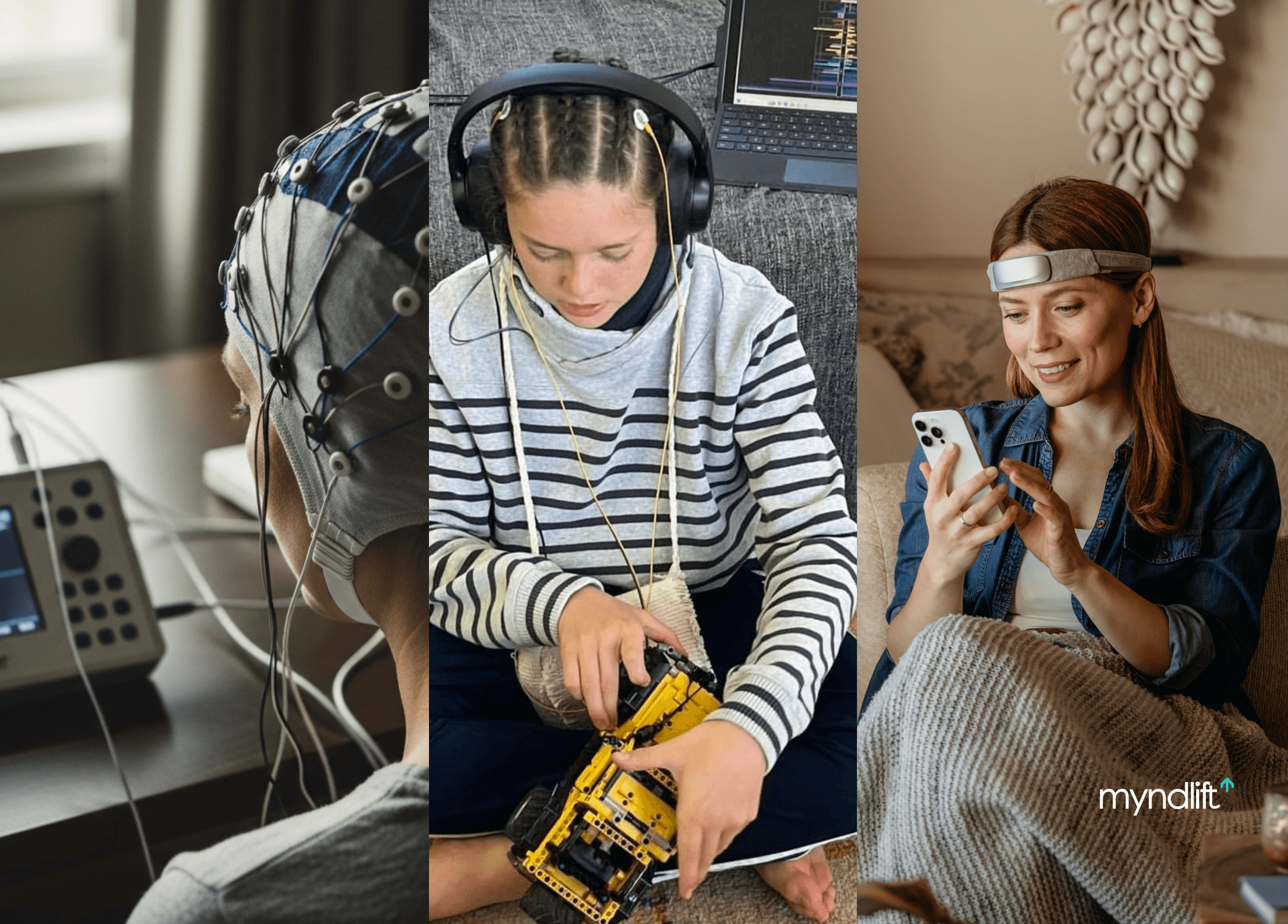

If you're evaluating neurofeedback platforms, you've probably run into the same frustrations: limited visibility when clients train remotely, engagement that fades once the novelty wears off, and hours lost digging through scattered notes and files before every session.
Myndlift was built to close those gaps.
It brings assessments, personalized protocols, at-home training, progress tracking, and clinical tools into one platform. Your clients train with an EEG headband and the Myndlift app, while you manage the entire experience from a clinical dashboard.
Here are five recent additions that are changing how thousands of clinicians deliver neurofeedback, and one that you can look forward to in 2026.
1. Live EEG Monitoring
Remote neurofeedback doesn’t have to mean working with limited visibility.
With Live EEG Monitoring, you can see activity across all available EEG channels in real time, not only the brainwave being trained.
This gives you more context for what is happening during a session, helps you check signal quality, and lets you separate meaningful activity from movement-related noise.
You can view individual channels or their average, compare brainwave frequencies, and observe how a client’s EEG changes.
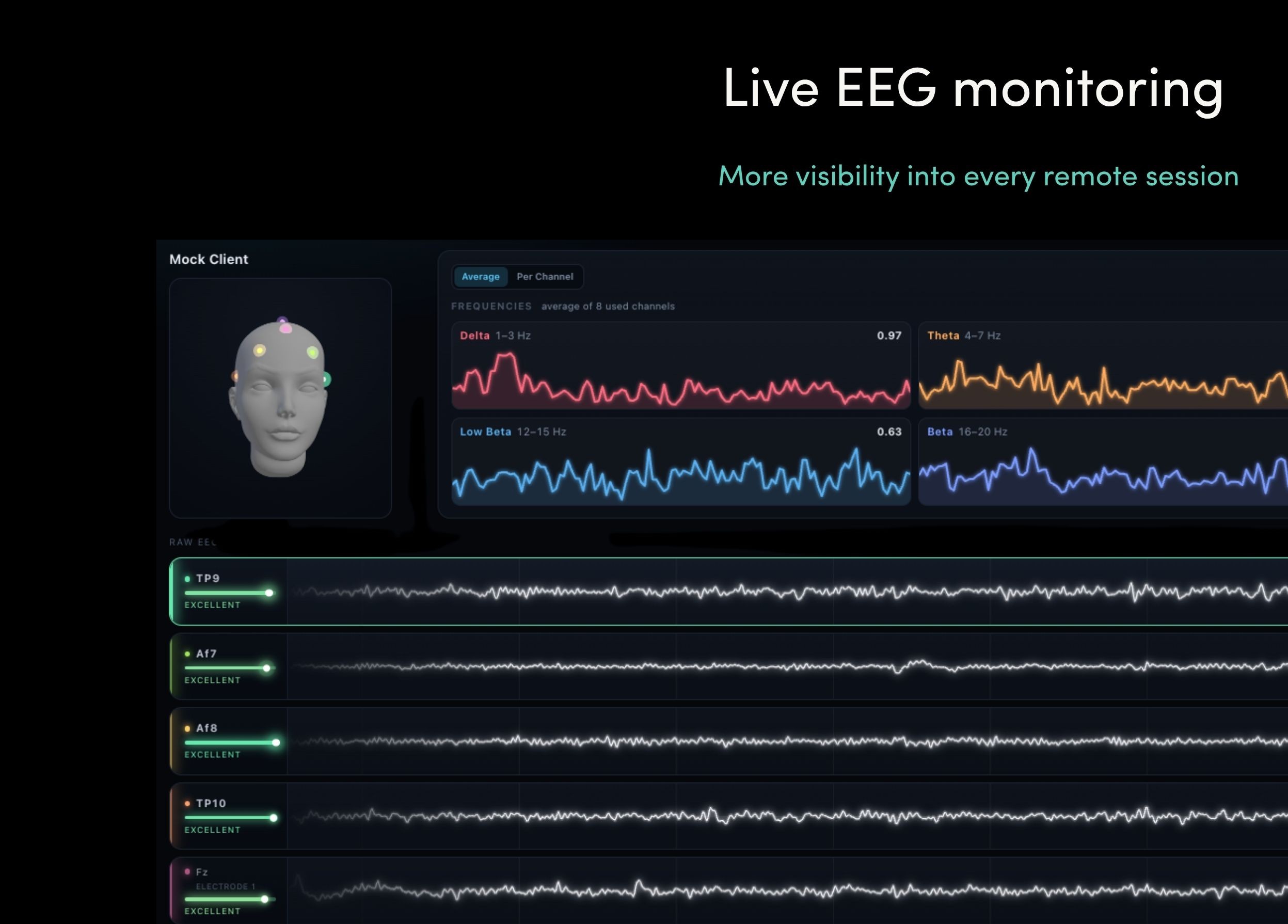
The headband’s motion sensors help flag potential movement artifacts, while an external electrode appears as an additional channel.
You can also follow training sessions and move between connected clients from the same screen, which gives you closer oversight even when you and your clients aren’t in the same room.
2. Brain Snapshots v2
Brain Snapshots give clients something neurofeedback often lacks: a quick, visual way to see what their brain activity looks like and understand what the data means.
Generated in three minutes, they can help you show prospective clients what neurofeedback can reveal before they commit to training.
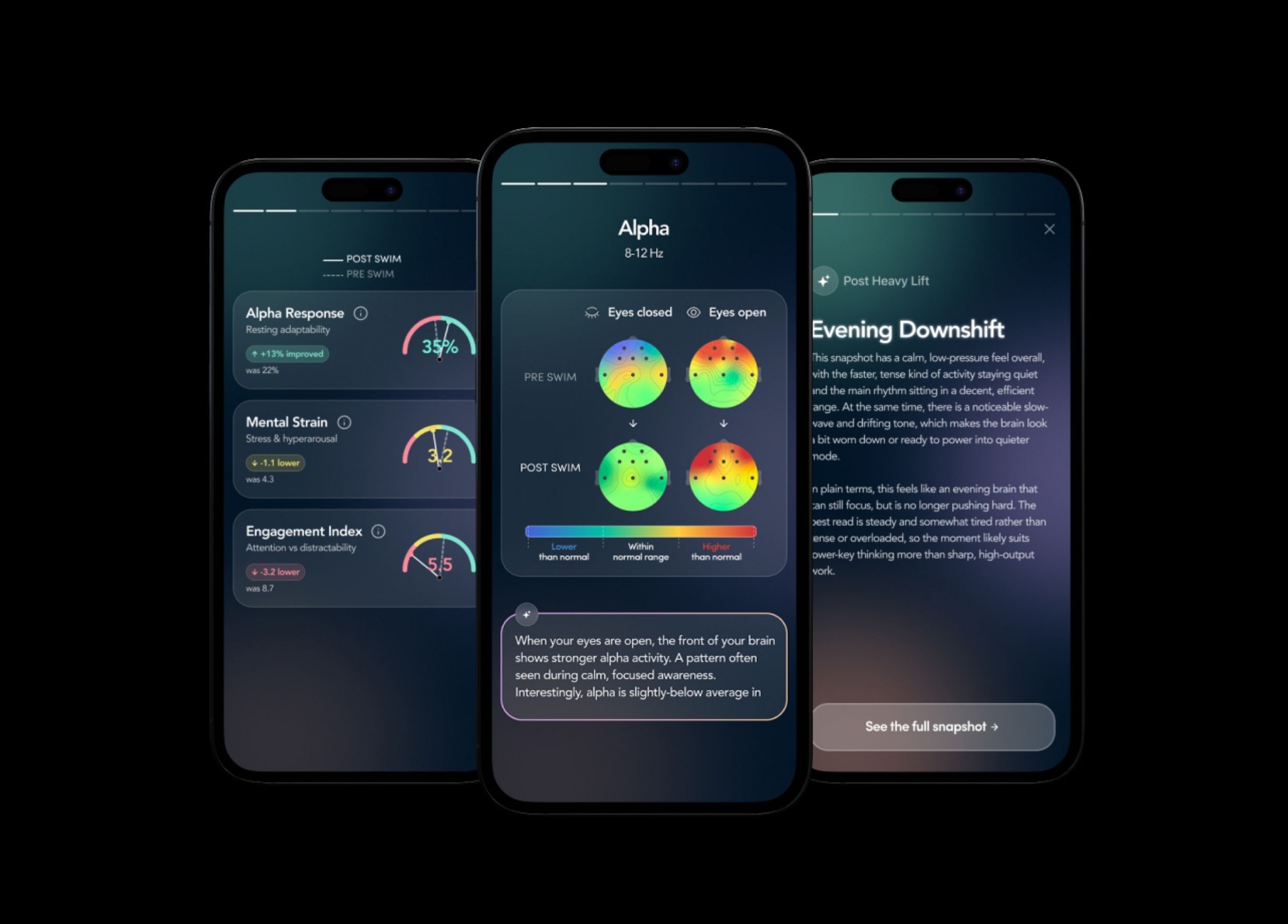
With existing clients, you can use them to explore how activity differs after exercise, coffee, supplements, or other everyday factors, helping make the process more tangible and keeping clients engaged.
Brain Snapshots v2 makes this even easier. Your clients can now compare two Snapshots side by side, while a single AI-generated summary explains all the metrics in one clear, client-friendly overview.
Snapshots are not a replacement for a full qEEG, but they can be a powerful complement and conversation starter.
3. Alpha-Theta Crossover Training
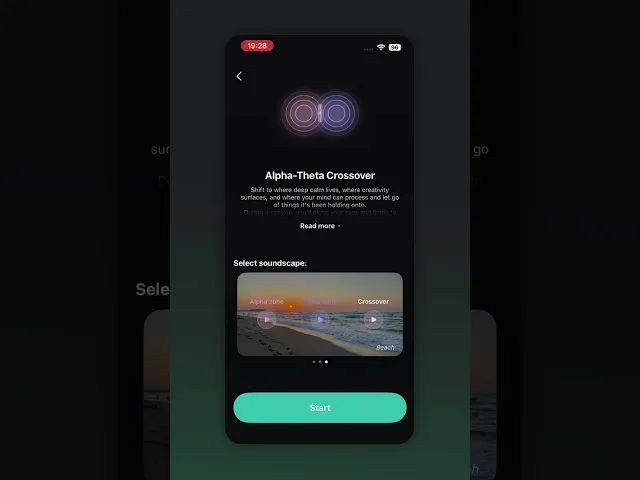
You can now deliver Alpha-Theta Crossover Training through Myndlift, giving clients a dedicated, immersive experience in the clinic or remotely.
During a session, they close their eyes and listen to a soundscape.
Separate sounds respond to alpha and theta activity, becoming louder as each reaches its target. When the theta-to-alpha ratio crosses the configured threshold, a gong marks the crossover event.
This audio-based feedback helps clients spend more time in the deeply relaxed, transitional state between wakefulness and sleep.
Alpha-Theta Crossover Training has long been used in some trauma-focused, addiction recovery, deep-relaxation, and peak-performance settings.
4. Clinical AI Assistant v2
Myndlift’s AI Assistant can now analyze more of your client’s information at once, helping you spot relevant patterns, prepare for sessions, and explore protocol options faster.
It can draw from clinical notes, Brain Snapshots, and uploaded files alongside the client information already available in Myndlift.
Uploads can include reports, spreadsheets, images, and EEG recordings exported from other systems, and can be saved directly to the client’s profile.
The Assistant also remembers your preferences across clients, so you don’t need to repeatedly explain how you approach protocols or want summaries written.
The payoff: less time gathering and reviewing scattered information, and more relevant support based on the fuller client picture, while you remain in control of clinical decisions.
5. Coming soon: combined EEG and fNIRS training
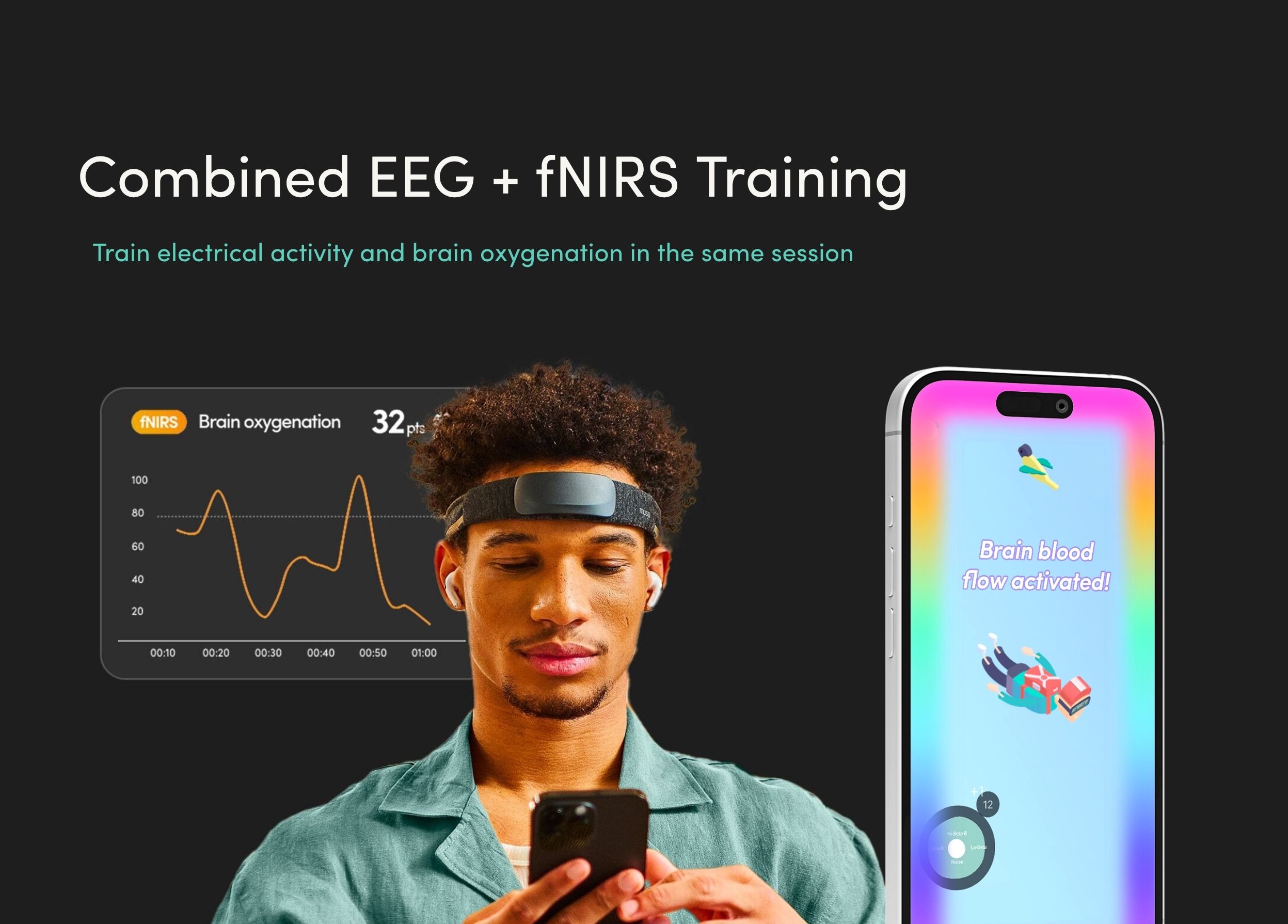
EEG shows the brain’s electrical activity. fNIRS shows how oxygenation changes alongside it.
In 2026, Myndlift will support simultaneous EEG and fNIRS training, combining real-time electrical feedback with insight into prefrontal oxygenation.
Together, they offer a more complete view of what’s happening during training:
How is the brain functioning electrically, and how is its oxygenation responding?
Clients will train with regular EEG feedback while fNIRS runs in the background. When oxygenation reaches the target range, subtle visual cues will appear around the screen. After the session, you’ll be able to review both signals separately, with more detailed fNIRS data available in your clinical dashboard.
How it all adds up
Together, these updates make it easier to manage the full neurofeedback journey in one place, from the first assessment to ongoing at-home training.
They’ve also been shaped by the clinicians who use Myndlift every day and tell us what would make the platform work better for their practices and clients.
Thank you to the thousands of clinicians who continue to share feedback, test new features, and help us decide what to build next. We’re listening, and we’re far from finished.
Want to see what this could look like in your practice? Schedule a demo for a personalized tour of the clinical dashboard and the tools most relevant to the way you work.
Related posts