• If you have a Muse headband, you can use the free version of Myndlift.
• The free Myndlift version includes 30 peak-performance sessions with a choice of 12 activities, including streaming, games, video training, Harmonia functional music, and audio-based training.
• Free training includes 3D neurofeedback. Visual, auditory, and haptic cues turn every session into full-body immersion, so you can see, hear, and feel your brain improve.
• Muse works by reading your brainwaves and giving real-time feedback to guide you into an alpha state.
• Myndlift works by training multiple brainwave frequencies through dynamic visual, audio, and haptic feedback that adapts to your EEG activity.
• The full Myndlift program adds brain health checks (EEG), high-resolution measurement via an attachable electrode, personalized training plans made by your designed Neuro Coach, Brain Snapshots, and cognitive tracking.
When the phrase "brain training" comes to mind, many people may recall one of the most iconic lines from The Matrix: "I know kung fu." In the scene, Keanu Reeves' character Neo utters this line after the martial arts is swiftly "uploaded" to his brain via a futuristic computer sending data directly into his mind.
As Neo experiences the martial arts program, his body automatically learns the moves, and after the protocol is complete, he becomes a kung fu master. If only learning were that easy!
Realistically, mastering a style of kung fu still takes thousands of hours of practice. Still, the future of brain training did bring something equally astounding: With a certain type of training called neurofeedback, you now have the possibility to improve your cognitive functions such as memory or attention, as well as your mood and overall wellbeing, while listening to music, streaming your favorite TV show, or playing video games.
As opposed to the Matrix's computer program, with modern-day brain training, no data is being sent into your brain; but, on the bright side, you don’t need to train for thousands of hours to achieve the results you’re looking for. This type of training requires that you practice consistently for at least three weeks. Sure, you won't become a kung fu master overnight, but you will have powerful tools that can help you improve your cognitive functioning and emotional wellbeing.
Here's what your cutting-edge brain training toolbox consists of:
Tool #1: The Muse Headband
Tool #2: The Myndlift App
Tool #3: Expert Guidance
Tool #1: The Muse Headband
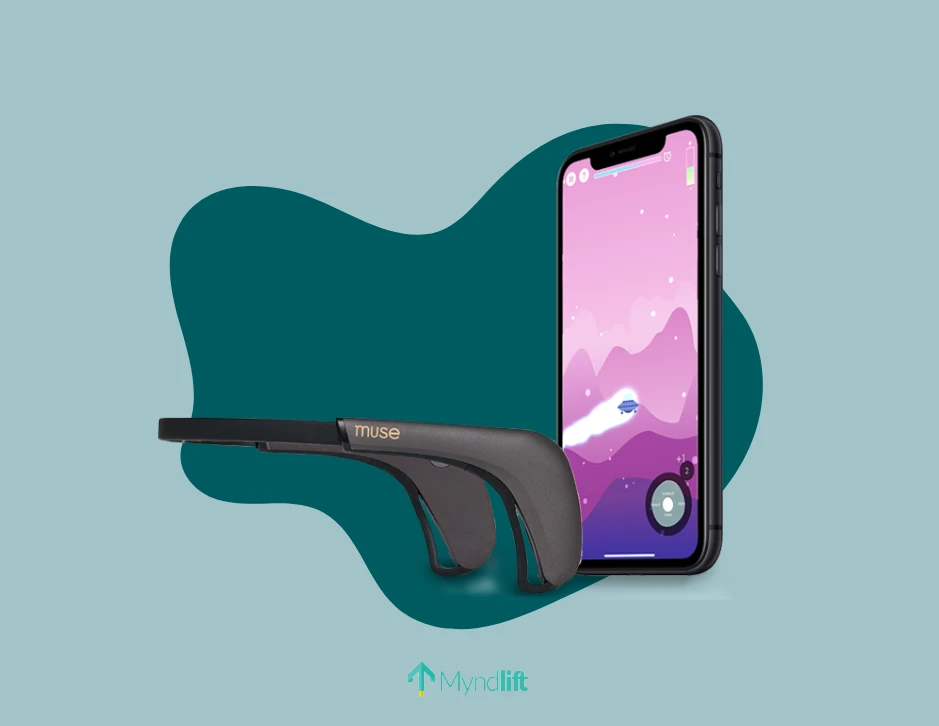
If you have a Muse headband, you know how it works. It connects to your mobile device via Bluetooth; you start the Muse Meditation app, and put the headband on.
Using advanced signal processing, this tool interprets your neural activity to help guide you through meditation. The guidance is done by Muse, sensing whether you're in a meditative state or not by monitoring your neural activity, also known as brainwaves.
Brainwaves are patterns of electrical activity occurring in the brain, and they can indicate when you're feeling tired, focused, or relaxed. While using Muse, you're training your brain to be on a specific brainwave frequency called alpha, which is typically associated with a relaxed state of mind.
For example, every time you enter into the alpha frequency, you hear serene weather. However, when your attention wanders, a stormy sound reminds you to refocus on your breathing.
Over time, with practice and consistency, this ability to gain insight into your neural activity and get audio feedback from it allows your brain to self-regulate and learn how to get into a relaxed, meditative state of mind more often.
Think of it as learning to ride a bike. Each time you fall, it's feedback for your brain telling you where you went wrong and how to rectify it. After a few falls and corrections, your brain learns to regulate itself and reach its optimal alpha brainwave state without the immediate reward of positive feedback.
As a result of using Muse, you may notice improved relaxation, increased cognitive performance, and stress relief. But what would happen if you were to train different brainwave frequencies?
Tool #2: The Myndlift App
Alpha is not the only brainwave; in fact, there are five frequency bands in the brain (i.e., delta, theta, alpha, beta, and gamma), and each frequency is associated with different states of consciousness, including alertness, relaxation, and sleep.
For example, when you're focused on solving a problem, your brain activity measurements will probably show increased beta brainwave activity. On the other hand, if you're tired and drifting off to sleep, it's more likely that theta will be your dominant brainwave frequency. Delta brainwaves are amplified while you're in deep meditation or dreamless sleep, and gamma waves dominate in times of intense focus.
All of these brainwaves are essential and active in various combinations throughout the day and night. Still, in a well-tuned brain, a particular brainwave state will arise in response to a particular context or circumstance, and the brain can be trained to produce these context-specific states in order to optimize coping, resilience, and cognitive or physical performance.
That's where the Myndlift app comes into play.
Myndlift employs the same feedback approach as Muse, but aside from training only alpha, you can also optimize other brainwave frequencies.
While doing brain training with Myndlift, your eyes are open, and you see a game or video that changes along with your brainwaves. For example, only when your brainwaves are in the optimal range, indicating you're focused, you're rewarded by getting more points in the game.
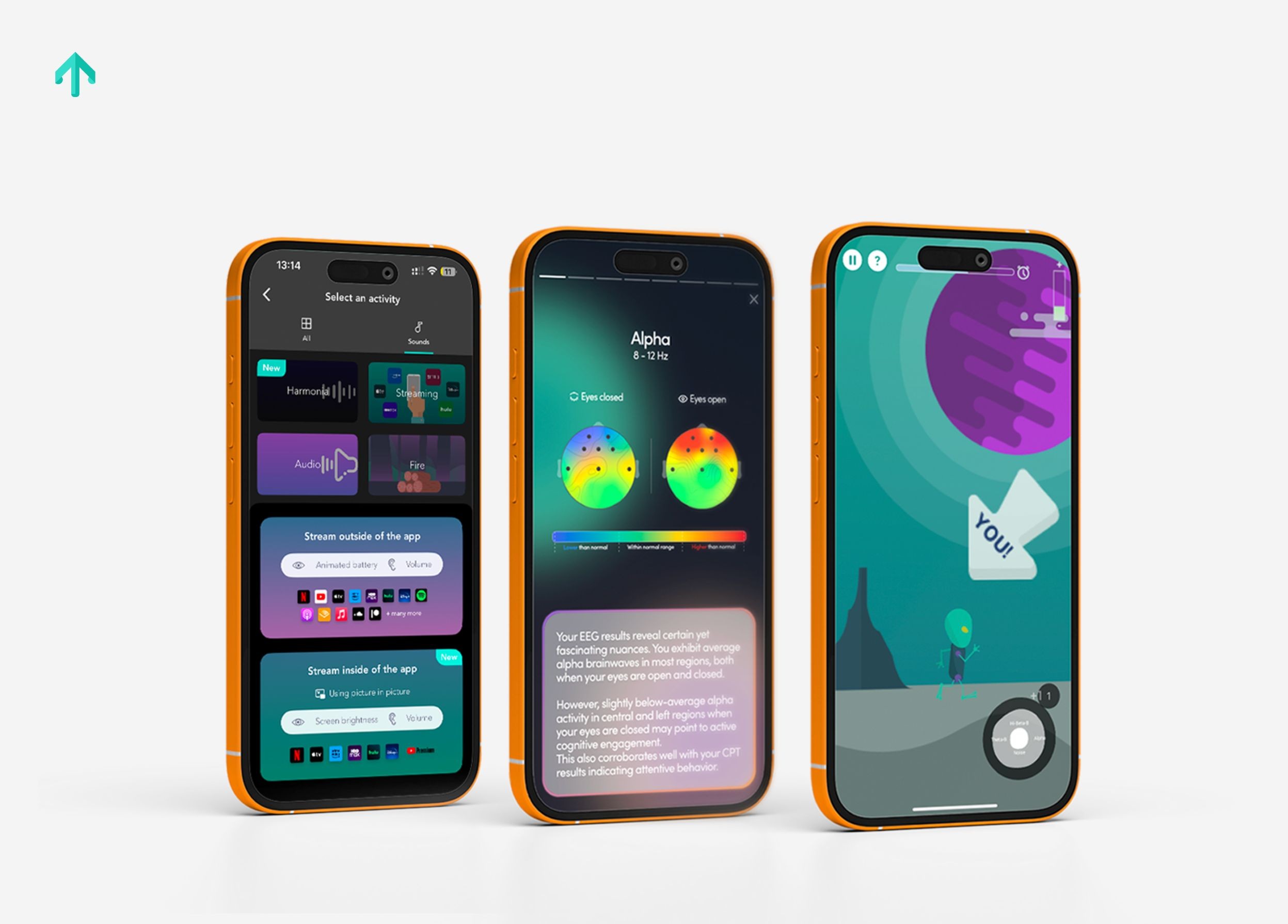
The ability to train different brainwave frequencies helps your brain train to achieve various states, such as relaxation or focus. It can also help alleviate symptoms of certain mental health conditions.
In fact, a recent peer-reviewed study published in the Journal of Medical Internet Research showed that Myndlift can help improve mental health and cognitive performance.
The preliminary findings demonstrated the efficacy of Myndlift brain training in improving mental health, particularly for individuals with symptoms of ADHD and anxiety.
Results also surpassed those seen in other in-app mental health services (e.g., mobile-enabled text psychotherapy, app-based CBT), which was particularly impressive. Over the course of an average of three months, the majority (61%) of study participants scoring in the abnormal ranges transitioned to the healthy results group.
What’s in the app?
With the full Myndlift program, the app becomes your training dashboard:
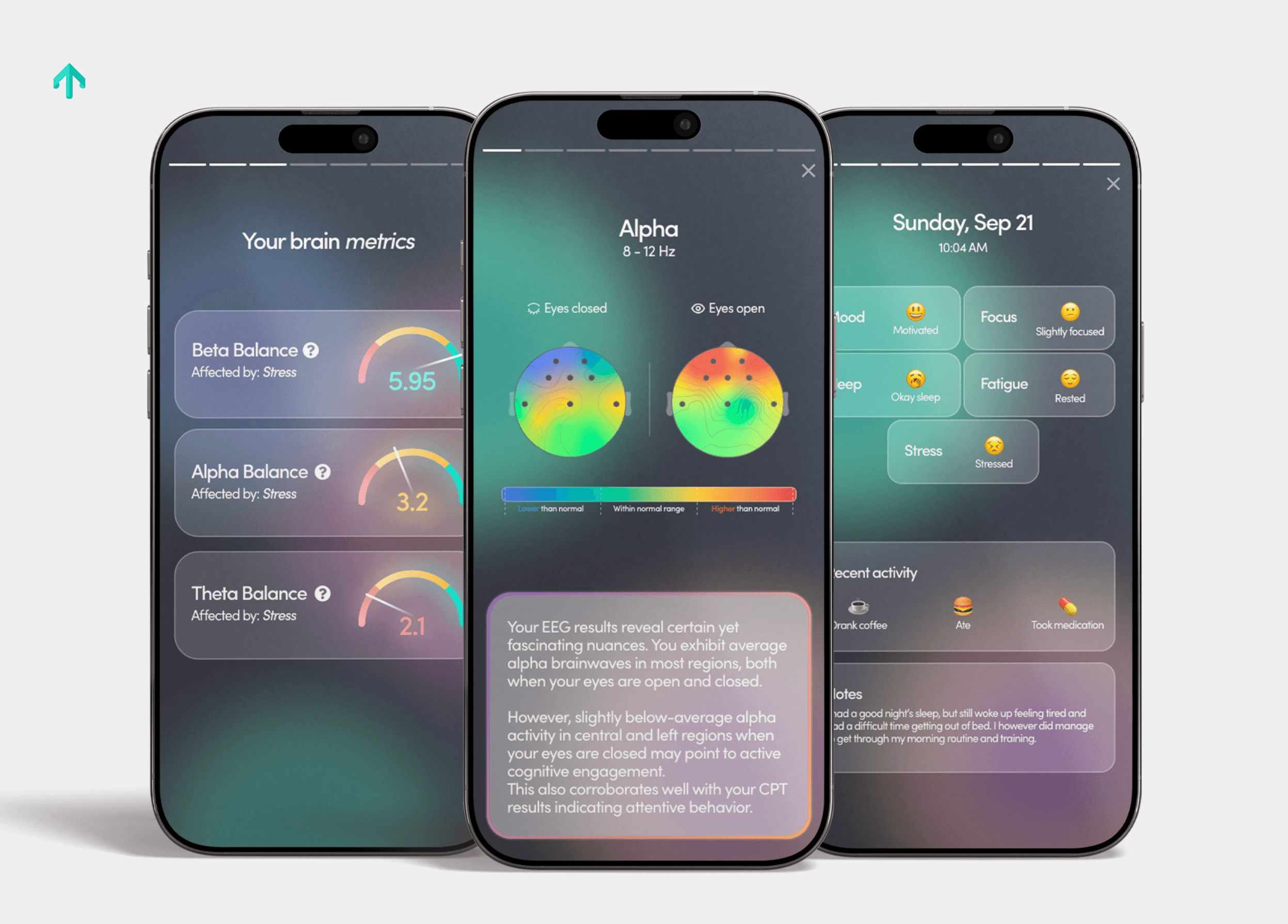
Baseline assessments: Start with qEEG brain mapping, cognitive checks, and symptom questionnaires to establish where your brain stands before training.
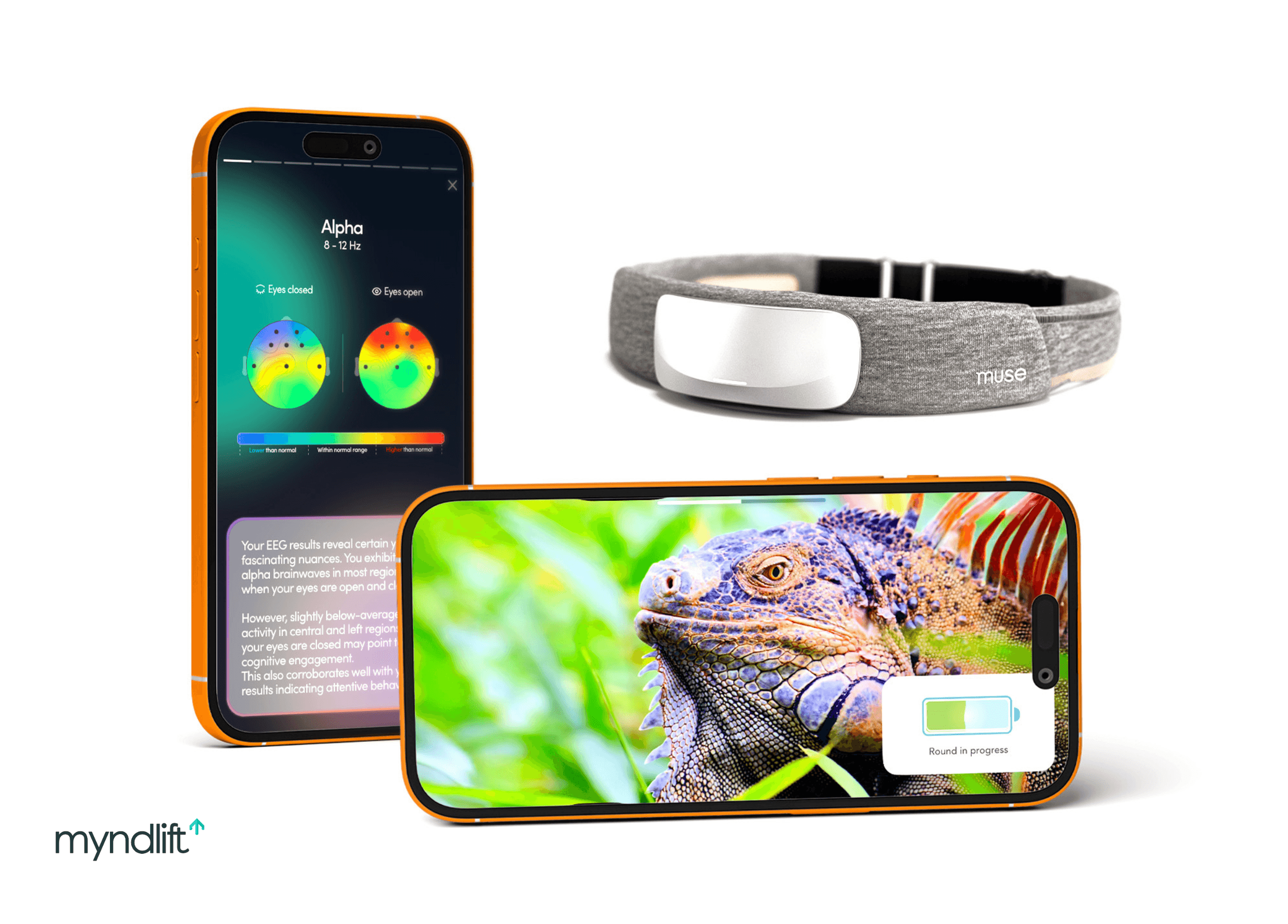
Brain Snapshots: Take quick daily scans that show how your brain is responding to sleep, stress, and routine.
Multiple training modes: Train through games, music, audio, YouTube, or streaming platforms while your brain activity is monitored and optimized in real time.
3D neurofeedback: Visual, auditory, and optional haptic feedback create an immersive training environment.
Harmonia: Functional music designed with neuroscientists and artists for focused, audio-based sessions.
In-app messaging: Connect with your Neuro Coach directly for guidance, adjustments, and progress reviews.
Alpha Peak: Track your peak alpha frequency over time to see how habits and lifestyle choices influence mental performance.
Progress insights: Follow your trends in focus, calm, and brain performance with clear session-by-session reports.
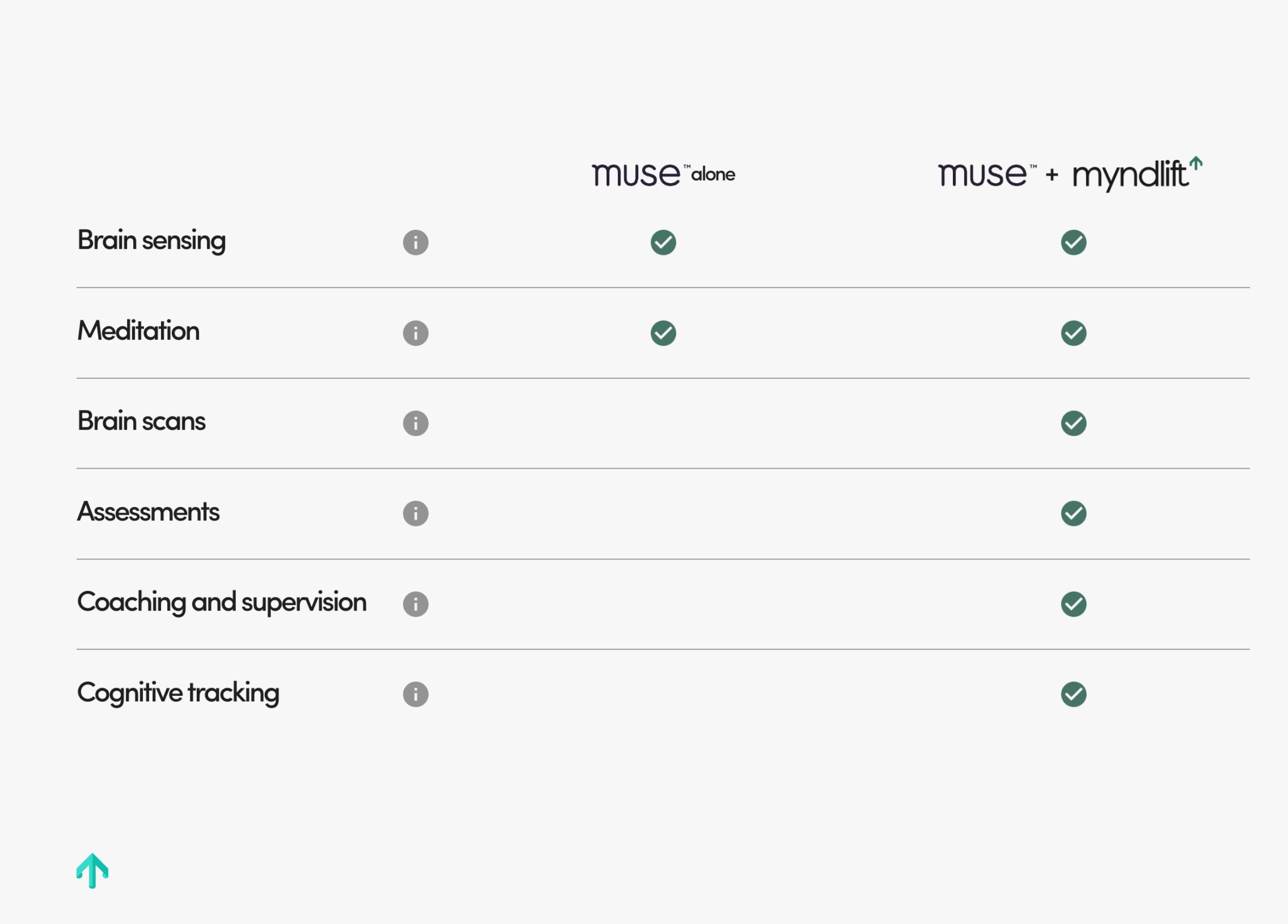
The Access to Myndlift’s Brain Training Toolbox Is Free
If you have a Muse headband, you can download the free version of the Myndlift app for iOS or Android and try out the brain training experience.
Myndlift is fully compatible with the Muse S Athena, Muse S, and Muse 2.
The free app version allows you to:
Do 12 peak-performance brain training sessions while streaming shows, watching videos, listening to music, or playing video games.
Do digital exercises that can help you build habits and stick to them as well as exercises that help you actively crush any thinking processes that may be interfering with focus and concentration. cognitive distortions you might be having.
Listen to guided meditations and feel yourself relax, focus, and unwind.
Do digital journaling to clarify your thoughts and reduce stress.
It's important to note that if you don't have a Muse yet, you can still benefit from using the Myndlift app by journaling, doing mindfulness exercises, and completing lessons that will teach you strategies to achieve peak performance.
And if you struggle to stay persistent, don’t worry; you can have an accountability partner by your side.
Tool #3: Expert Guidance
One of the things that makes Myndlift even more powerful is the possibility of having an expert guide by your side. With full app access, you can do a brain health check, also called EEG, which is a technology that measures your brainwave activity. This brain health check sets the benchmark for your current situation and where there's room for improvement.
It also gives your Neuro Coach (your designated brain training expert) insight into your brain and helps them customize a training program just for you.
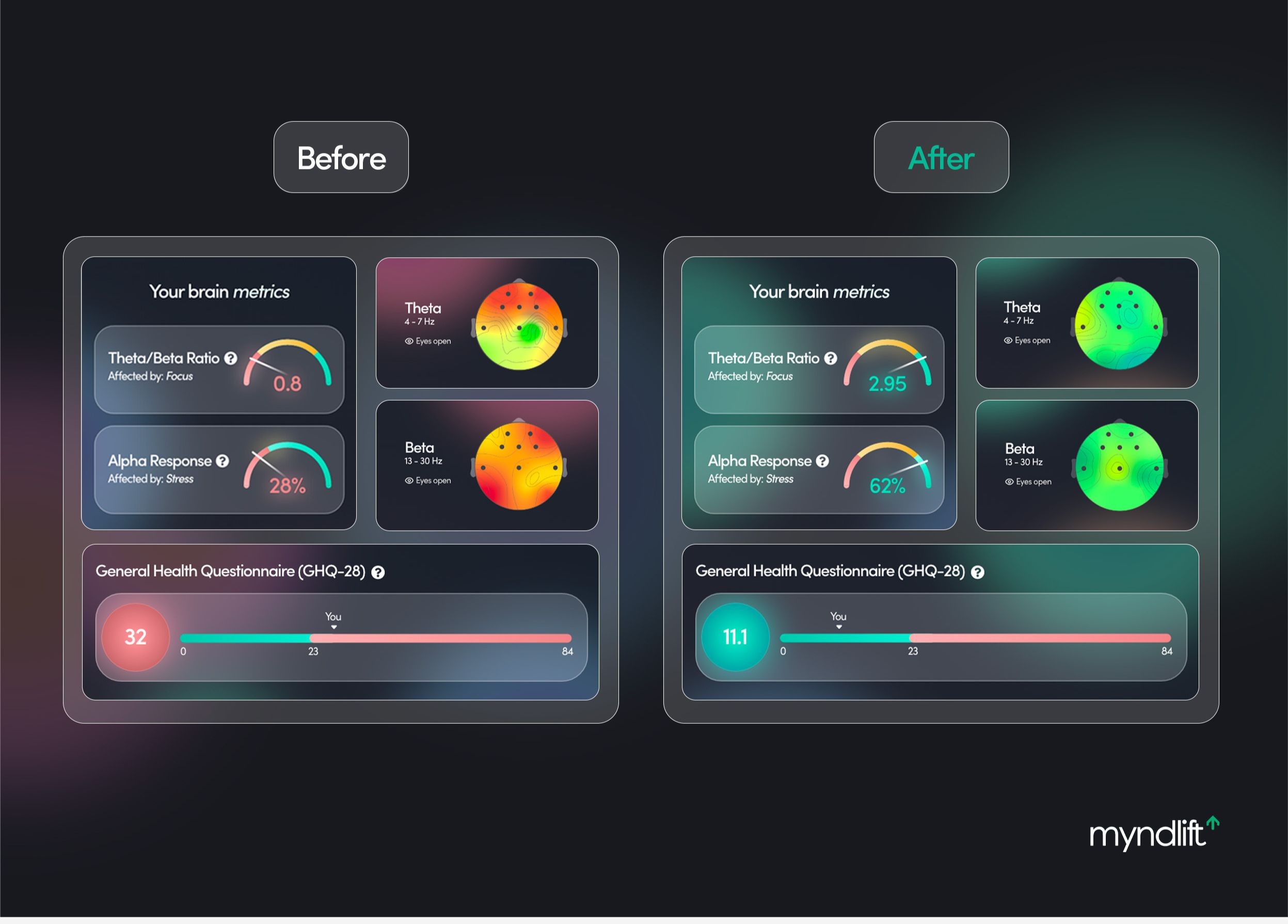
Your Neuro Coach can help with training, determine when you need to run a new brain health check to measure your progress, and see where there's still room for improvement.
Apart from being automatically connected to a Neuro Coach through the Myndlift app, you also have the option of choosing any Myndlift provider you want to work with based on your goals.
This way, you can get the most comprehensive care, which may include a variety of therapeutic techniques tailored to your own specific needs.
Whether you choose a Neuro Coach supervision through Myndlift or decide to work with a Myndlift provider of your choice, if you're having tech trouble or need guidance, you can also rely on the Myndlift Care team via chat, email, or phone.
Start Getting More Out of Your Muse Today
Having a Muse headband brings you closer to diving into all the possibilities of brain training. So three months from now, just like Neo, you might unlock your full potential, but instead of kung fu, you can learn to improve your memory and attention as well as boost your overall wellbeing.
The future of brain training is happening now. Download the free version of the Myndlift app, unlock your inner Neo, and start reaping the benefits today!
FAQs
Can I use Myndlift for free if I already have a Muse headband?
Yes. Muse S Athena, Muse S, and Muse 2 connect to the free version of the Myndlift app.
What does the free Myndlift version include?
30 peak-performance sessions, 12 activity options (including streaming, games, Harmonia, and audio training), 3D neurofeedback, guided meditations, digital habit exercises, and journaling.
What does the full Myndlift program add?
EEG-based brain health checks, high-resolution measurement via an attachable electrode, personalized protocols, Brain Snapshots and detailed cognitive tracking, plus ongoing support from a real human expert.
Do I need a Muse to use the Myndlift app?
No. Mindfulness tools, journaling, and lessons work without hardware, but EEG-based training requires a Muse or Myndlift sensor.
How do I buy Myndlift?
You can buy Myndlift directly on our website. Choose a program, complete checkout, and we’ll ship a compatible Muse headband to you and give you access to the Myndlift app and guided neurofeedback training.

About the checker:

Carola Tuerk, Ph.D.
Carola is a cognitive neuroscientist and a scientific consultant for Myndlift. In her research, she is particularly interested in how early life experiences shape brain development and mental health with a particular focus on children. She has obtained a BSc in psychology, an MSc in neuroscience, and a PhD in cognitive neuroscience and is passionate about brain health. In her free time, Carola likes to exercise or play music to relax.
References
Gruzelier JH. EEG-neurofeedback for optimising performance. I: a review of cognitive and affective outcome in healthy participants. Neurosci Biobehav Rev. 2014 Jul;44:124-41. doi: 10.1016/j.neubiorev.2013.09.015. Epub 2013 Oct 12. PMID: 24125857
Balconi M, Fronda G, Venturella I, Crivelli D. Conscious, Pre-Conscious and Unconscious Mechanisms in Emotional Behaviour. Some Applications to the Mindfulness Approach with Wearable Devices. Applied Sciences. 2017; 7(12):1280. https://doi.org/10.3390/app7121280
Whitehead JC, Neeman R, Doniger GM, Preliminary Real-World Evidence Supporting the Efficacy of a Remote Neurofeedback System in Improving Mental Health: Retrospective Single-Group Pretest-Posttest Study
JMIR Form Res 2022;6(7):e35636
Related posts